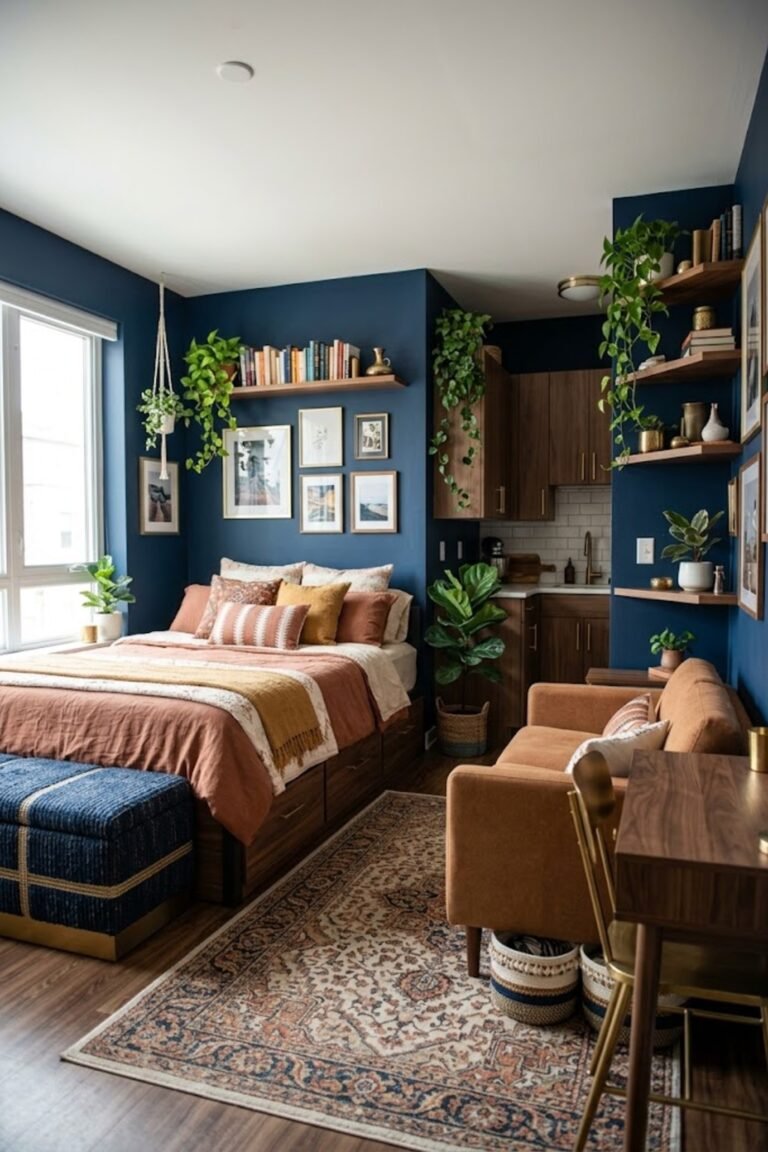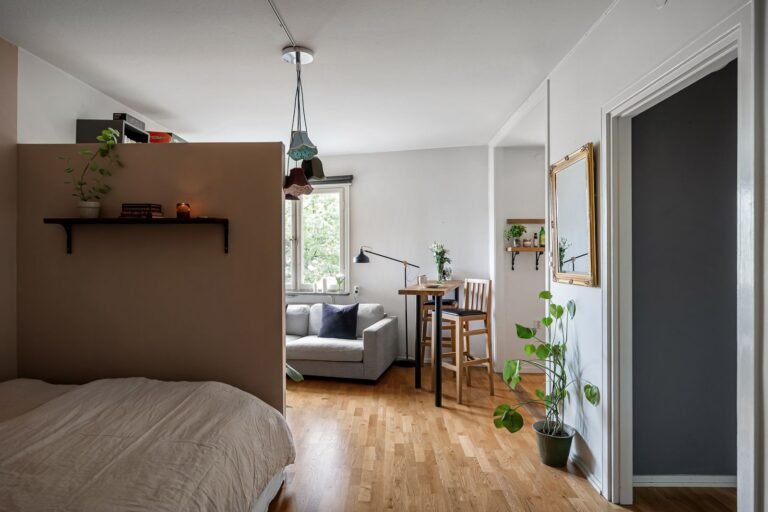
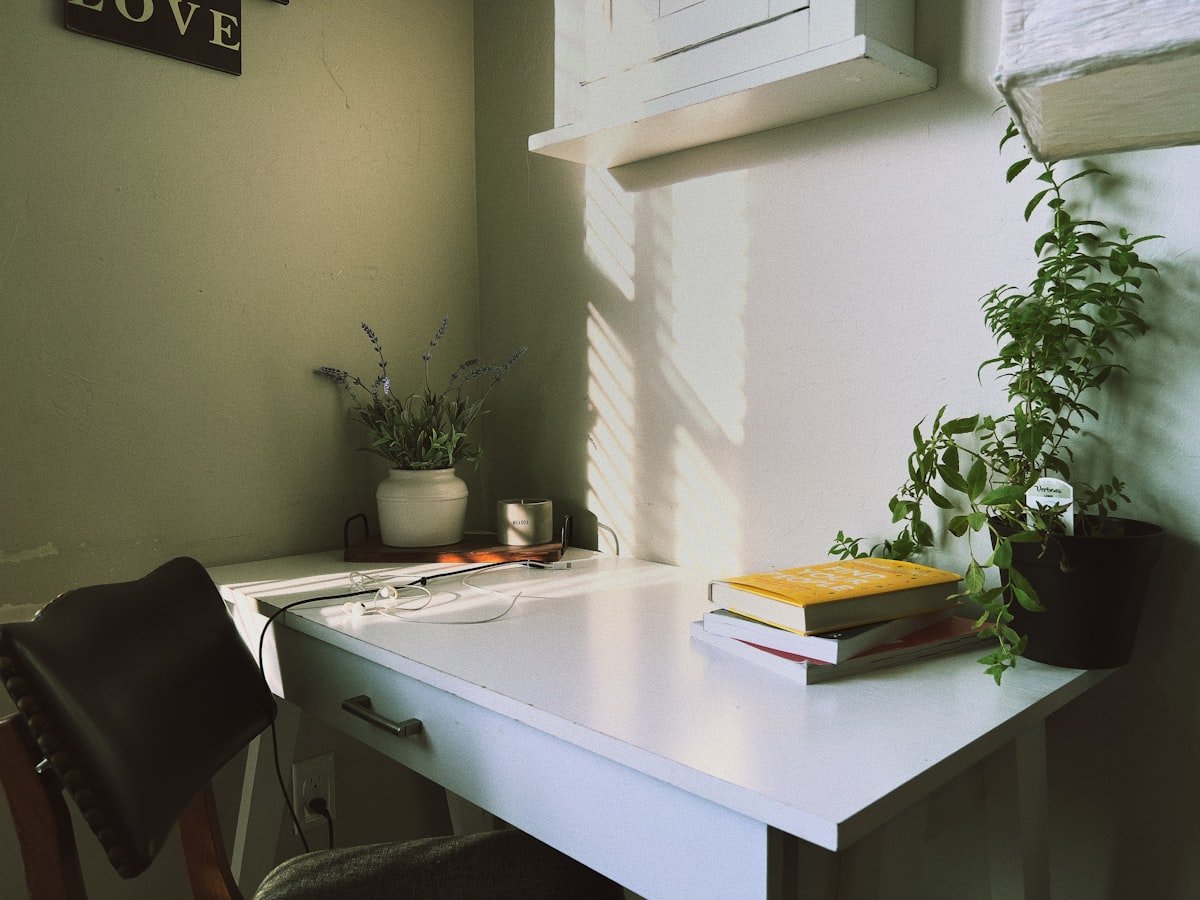
Choose a nook with a clear exit route, fit the desk and chair to your body, and budget for external input devices when you raise a laptop.
In this guide
A dedicated work surface can make it easier to arrange a comfortable posture and separate work from rest. But most small apartments have at least one forgotten pocket of space that can become a real office nook — usually for less than one month of coworking membership. Here is how to find it and build it.
First: find your hidden office
Walk your apartment and check these five spots, in order of preference:
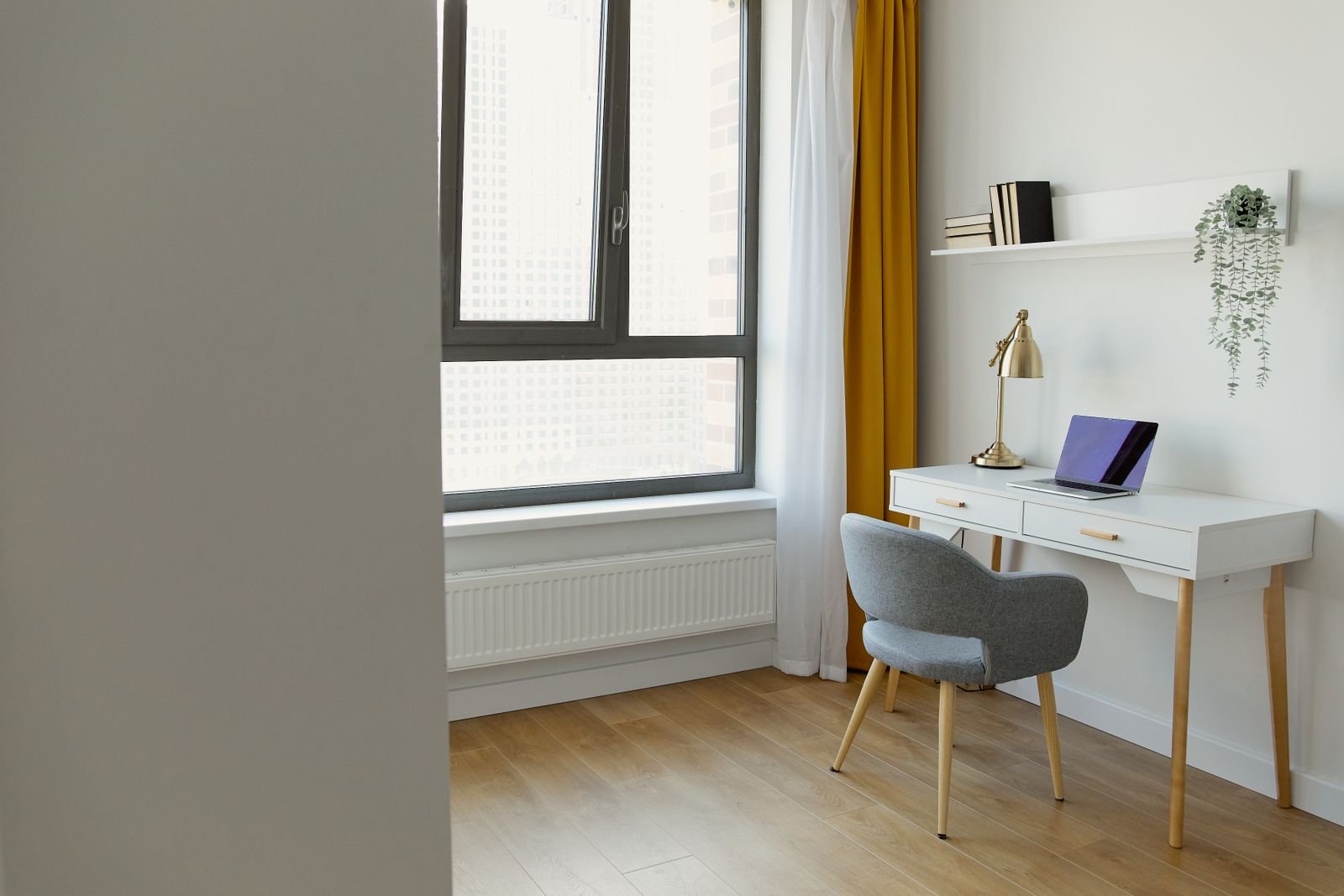
- The bedroom corner beside the window — best light, natural work/life separation.
- The dead wall behind the living room door — a 30-inch desk fits where nothing else would.
- The closet office (“cloffice”) — a reach-in closet with the doors removed fits a desk and shelves, and disappears behind a curtain after hours. Only remove doors with permission and safe storage; avoid permanent shelving without approval.
- The hallway wide spot — only if the desk and chair leave the required exit route clear.
- The window end of a kitchen counter — last resort, but a dedicated stool and a “work basket” makes it official.
The budget setup list
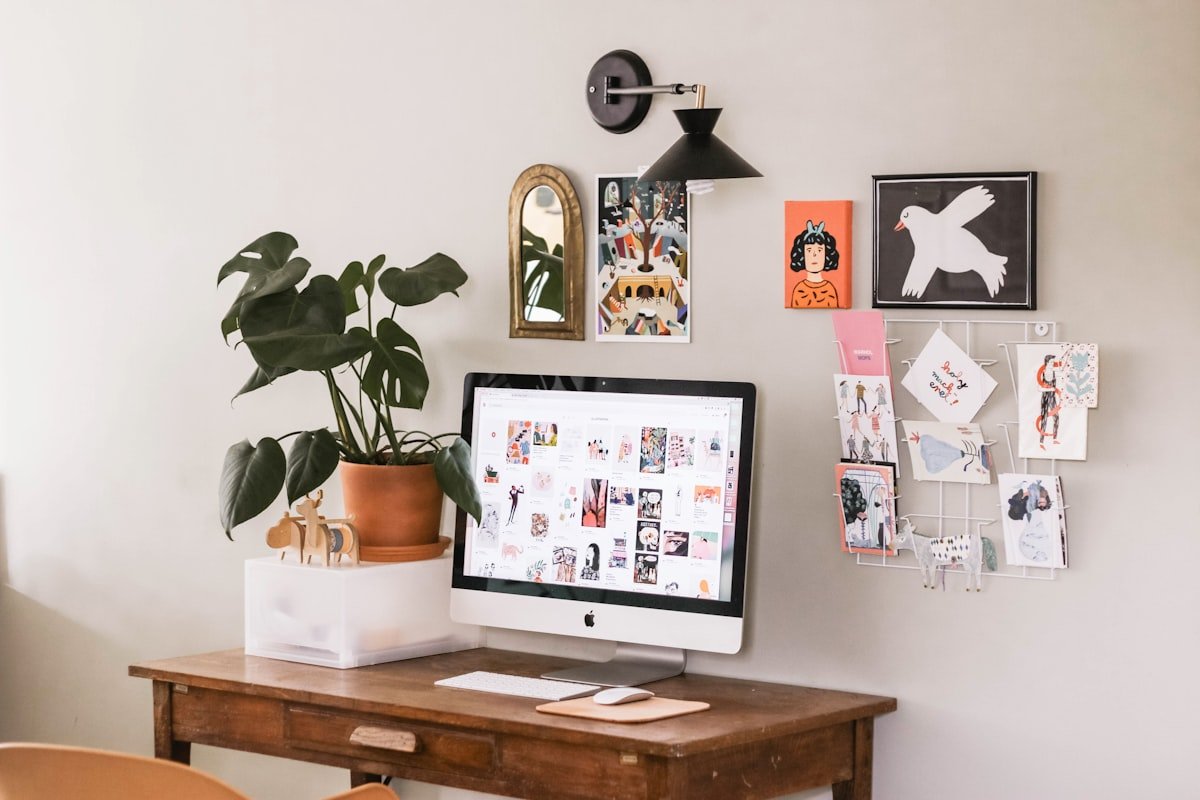
- Desk: secondhand is unbeatable — solid wood desks flood local marketplaces because everyone is always moving. Need narrow? Search “console table” instead of “desk”.
- Chair: the one item where function beats looks. Used task chairs from office liquidations are the classic bargain. If the nook is visible from the living area, choose a stable chair with suitable back support and height; a cushion alone cannot make a poorly fitting chair suitable for long work sessions.
- Task lamp with a warm-to-neutral bulb — light your work surface, not your ceiling.
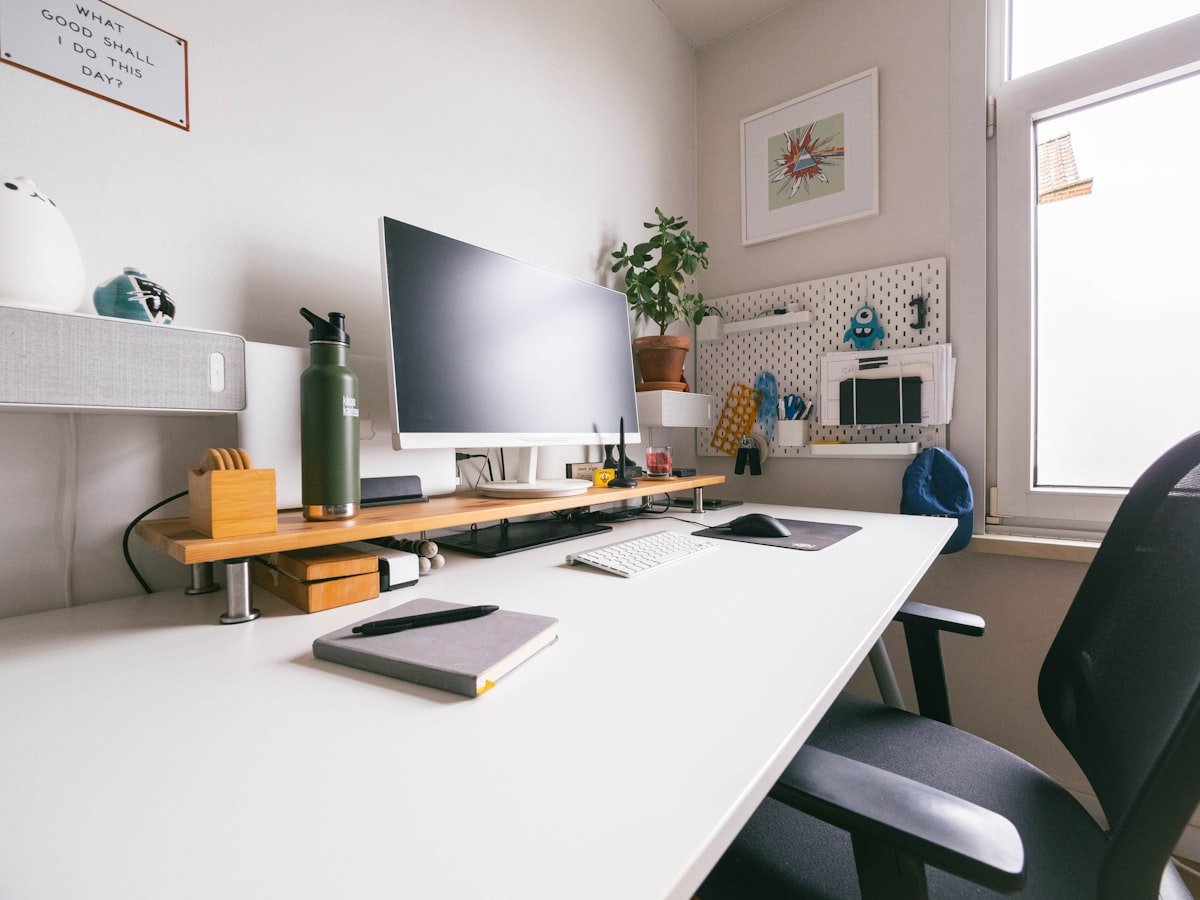
- Laptop riser: a stable, ventilated stand raises the screen; add an external keyboard and mouse so raising the screen does not also raise your hands.
- Cable discipline: adhesive clips and one velcro roll — the difference between “nook” and “nest of wires”.
Make it disappear after hours
The secret to loving a home office in a small apartment is being able to stop seeing it at 6 p.m.:
- A desk drawer (or one large basket) swallows the loose stuff at day’s end.
- The laptop closes and stands vertically in a slim rack — footprint of a book.
- In a cloffice or curtained nook, you literally close the office — pairs perfectly with our studio layout guide.
The video-call corner check
- Open your camera app and look at what is behind you before committing to a spot.
- A blank wall is fine, a made bed is not — a small gallery wall or a shelf with plants and books is ideal.
- Light your face from the front (window or lamp behind the laptop), never from behind.
Ergonomics in two sentences
- Keep shoulders relaxed, elbows near your body, wrists straight, and the screen at a comfortable viewing height. Adjust the chair and input devices together.
- Support your feet flat on the floor or on a stable footrest. Change position and take short movement breaks.
Claim it officially
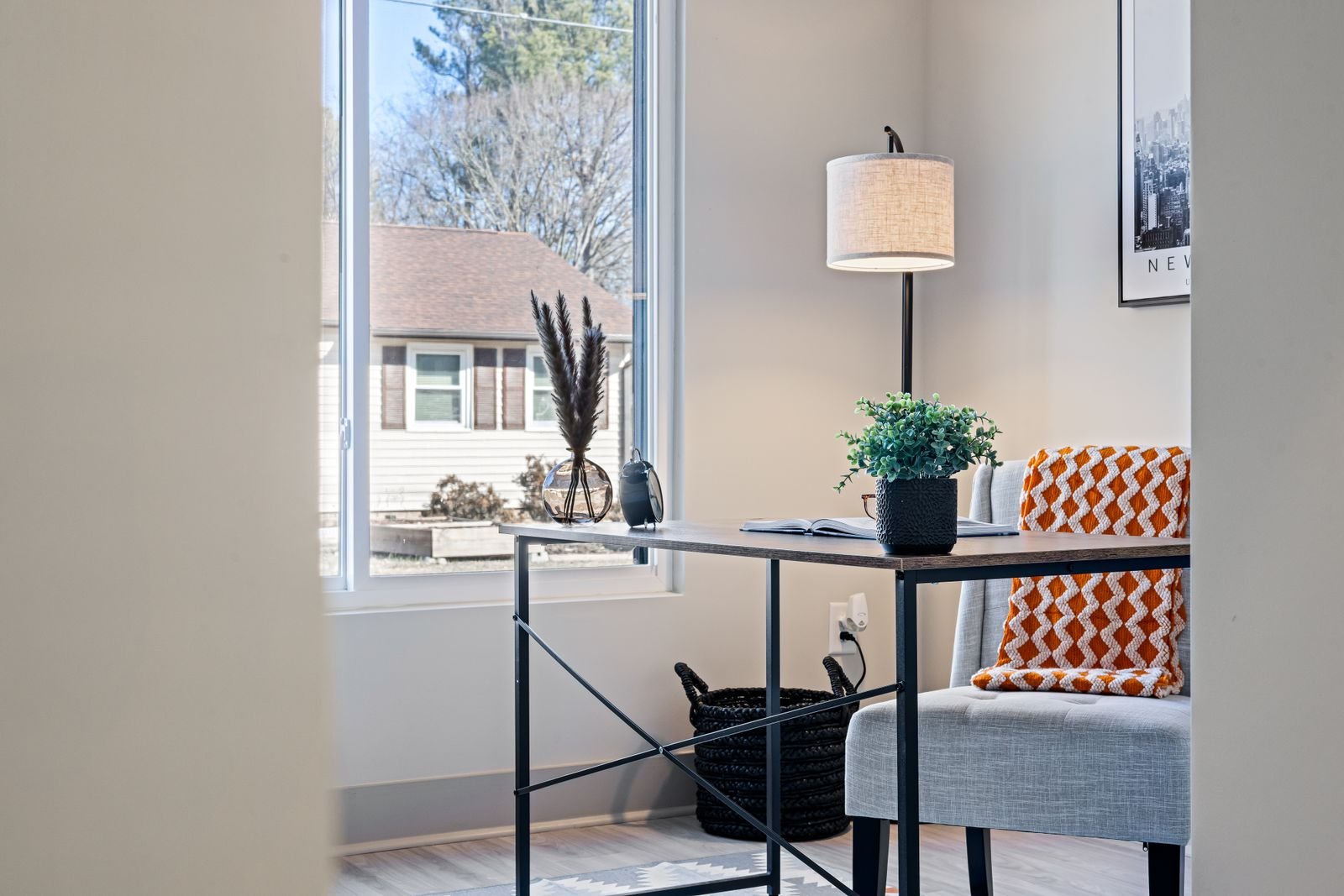
- One plant (an easy-care option).
- One object you like looking at.
- One hard rule: mail does not land there.
For a fuller setup check, use the OSHA computer-workstation checklist. Photos illustrate layouts; they do not establish that every pictured setup fits every user.