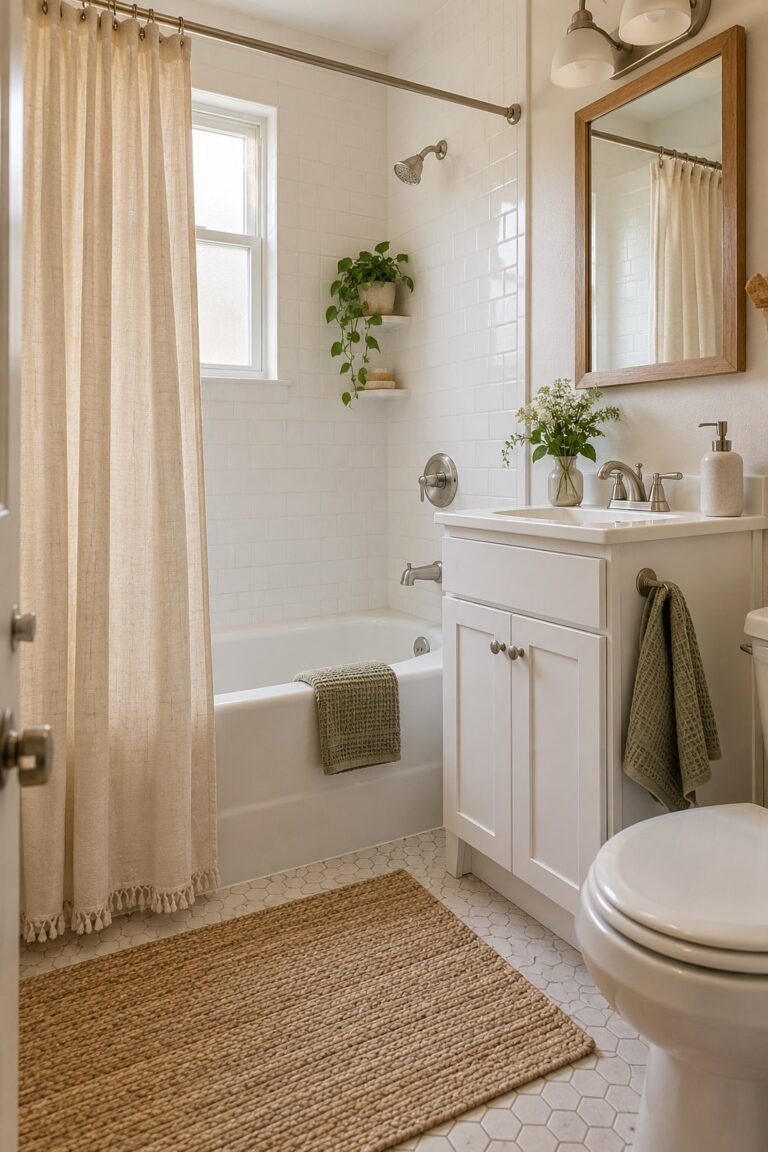
A small apartment bathroom works better when each everyday item has a place and the floor stays easy to move through. More shelves are not always the answer: sometimes the useful fix is fewer bottles in the shower, a smaller daily basket or a towel position that actually lets fabric dry. These 19 small apartment bathroom storage ideas build a simple routine around the space you have.
Image note: The 19 original images in this article are AI-generated inspiration visuals, not photographs of completed renovations or tested products. Adapt each idea to your measurements, lease and product instructions.
Before you start: check fit, moisture and permissions
Measure the available space, including doors, drawers and the toilet lid when open. Keep vents, plumbing valves and everyday walking space accessible. Check your lease before changing hardware or attaching anything to a wall or cabinet. Decorative upgrades should never conceal leaks, dampness or damaged fixtures; report those problems for maintenance first.
19 bathroom storage ideas for a small apartment
1. Choose storage that preserves the walking space
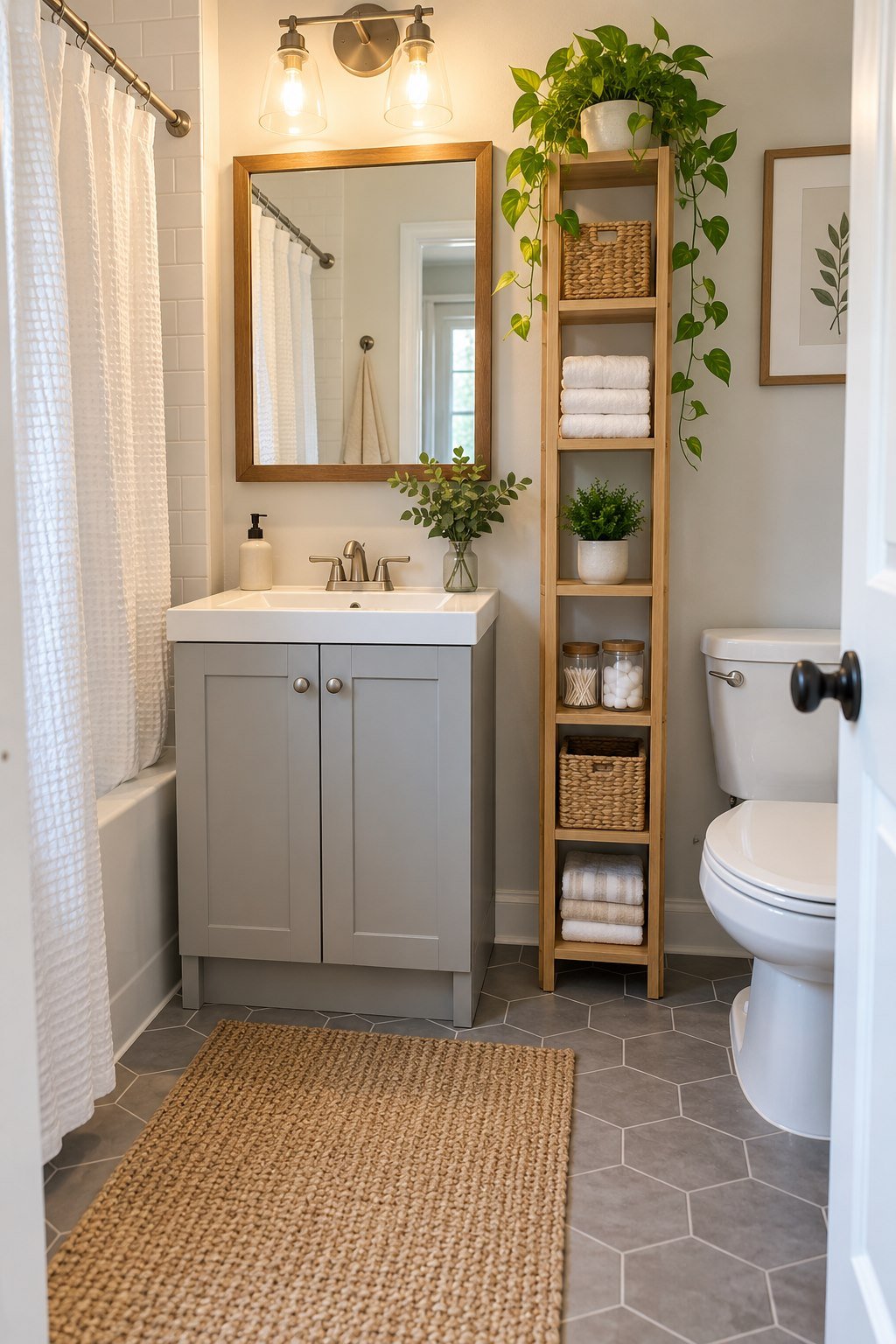
A narrow storage tower can make a tiny bathroom useful when it fits a genuine unused recess. The goal is to bring everyday items within reach without creating an obstacle between the door, sink and tub. Measure width, depth and height first.
Make it work at home: Mock up the footprint with paper or a cardboard box. Open the door and any drawers fully and sit on the toilet to test the clearance. Follow stability and anchoring instructions; if safe anchoring is required but prohibited, choose a different unit.
2. Sort daily products before buying organizers
Empty one area at a time and separate everyday products from spares, occasional items and things you no longer need. This shows how much storage the bathroom actually requires. Do not buy a large organizer to accommodate products you never use.
Make it work at home: Keep the daily group small enough to lift together for cleaning. Store unopened spares elsewhere when space is tight. Check product storage instructions: heat and humidity may make another room a better home for certain cosmetics or medicines.
3. Work around the pipes under the sink
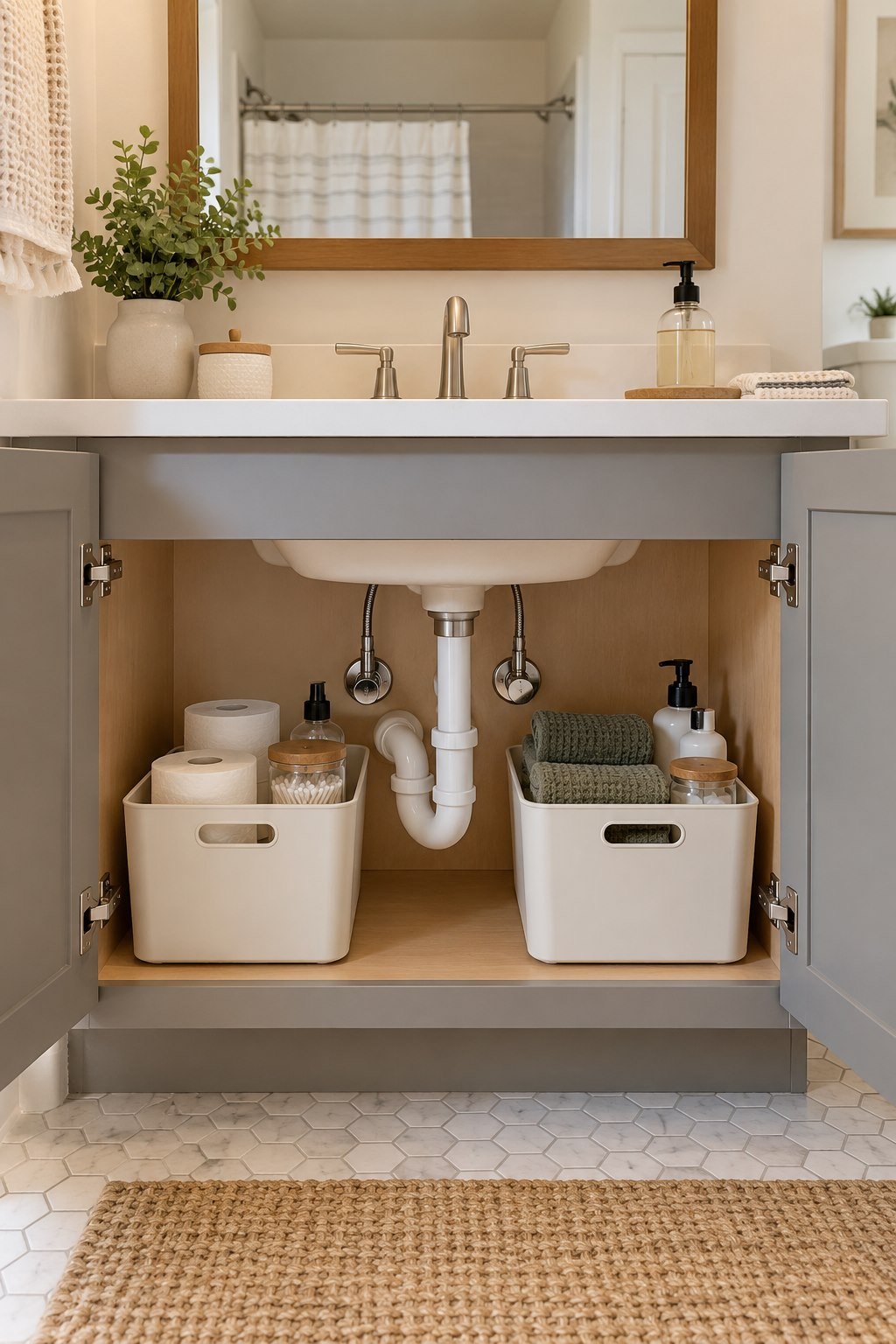
Two small bins can fit more usefully than one large box around a drain trap. Measure at the narrowest points, including hinges and pipework. Choose bins that pull out without hitting the plumbing or catching on the cabinet frame.
Make it work at home: Keep shutoff valves visible and reachable, and leave room to inspect for leaks. Do not hang loads from pipes. If the cabinet feels wet, smells damp or has a leak, arrange maintenance before adding storage that might conceal the problem.
4. Use shallow drawer dividers
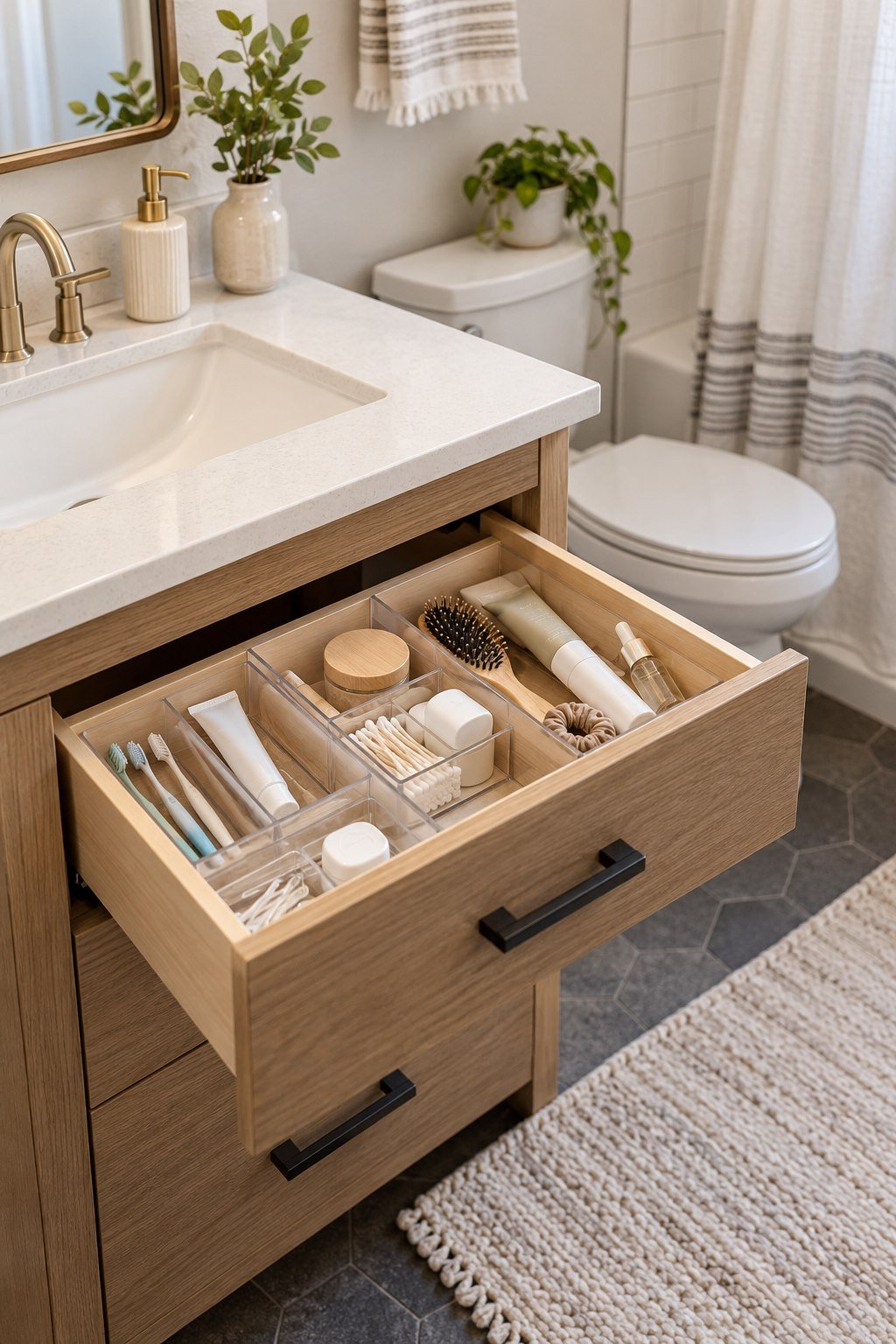
Dividers help small daily items stay visible, especially in a vanity drawer where brushes and tubes otherwise roll together. Choose a height below the drawer’s internal clearance so it closes easily. Start with a few broad categories.
Make it work at home: Measure usable internal dimensions rather than the outside drawer front. Leave room to lift an item without digging. Removable washable trays are helpful around occasional drips; wipe and dry the drawer before putting them back.
5. Try a lightweight cabinet-door pocket
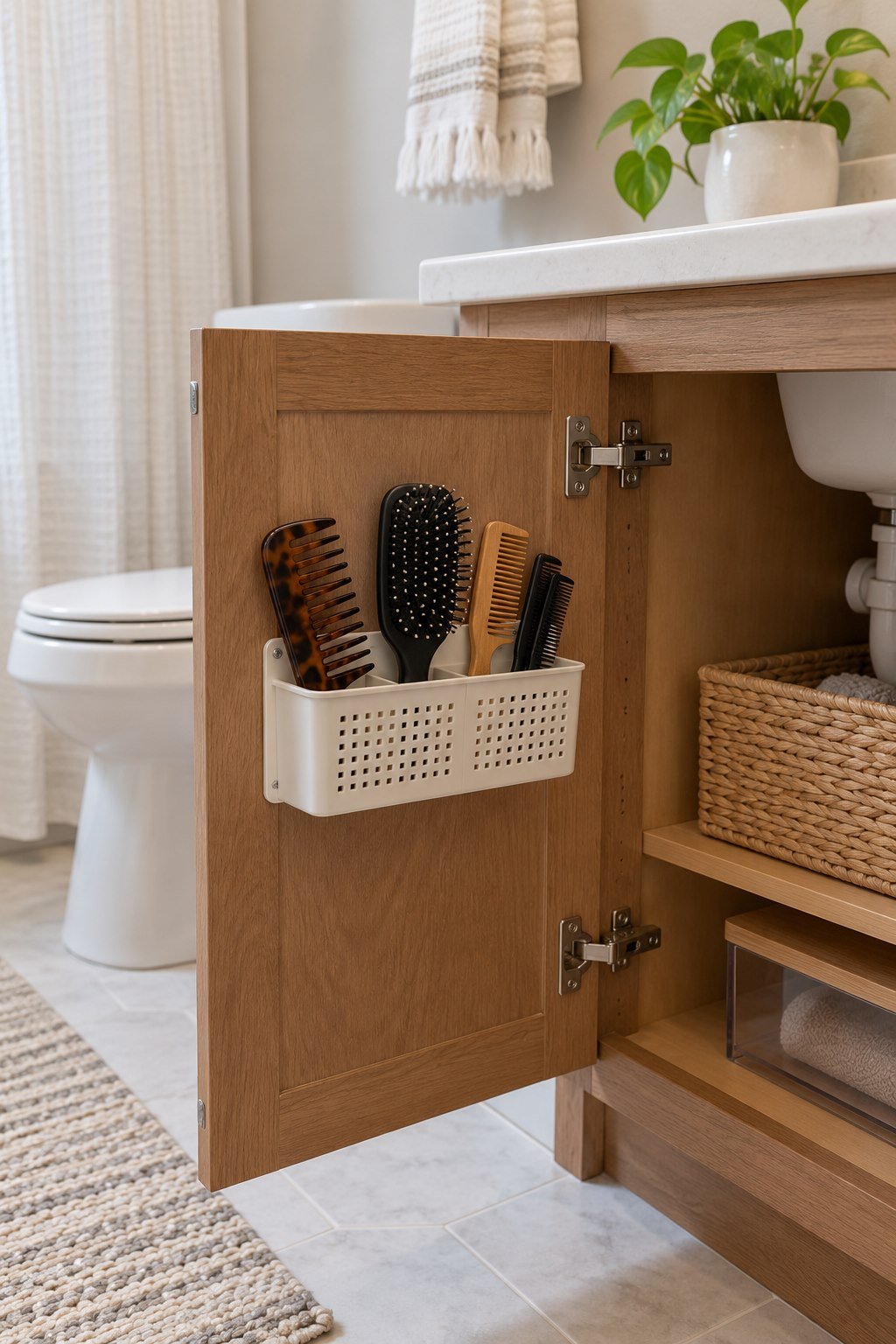
A shallow organizer inside a vanity door can hold combs or a few lightweight grooming supplies. It works only when the door can still close and the attachment suits the cabinet material. Test the position with the door fully open and shut.
Make it work at home: Do not place heavy bottles on thin cabinet doors or block the hinge. Use approved bathroom-rated attachments and follow surface, weight and curing instructions. A removable adhesive is not a promise that every rental finish will remain undamaged.
6. Use the space beside the toilet carefully
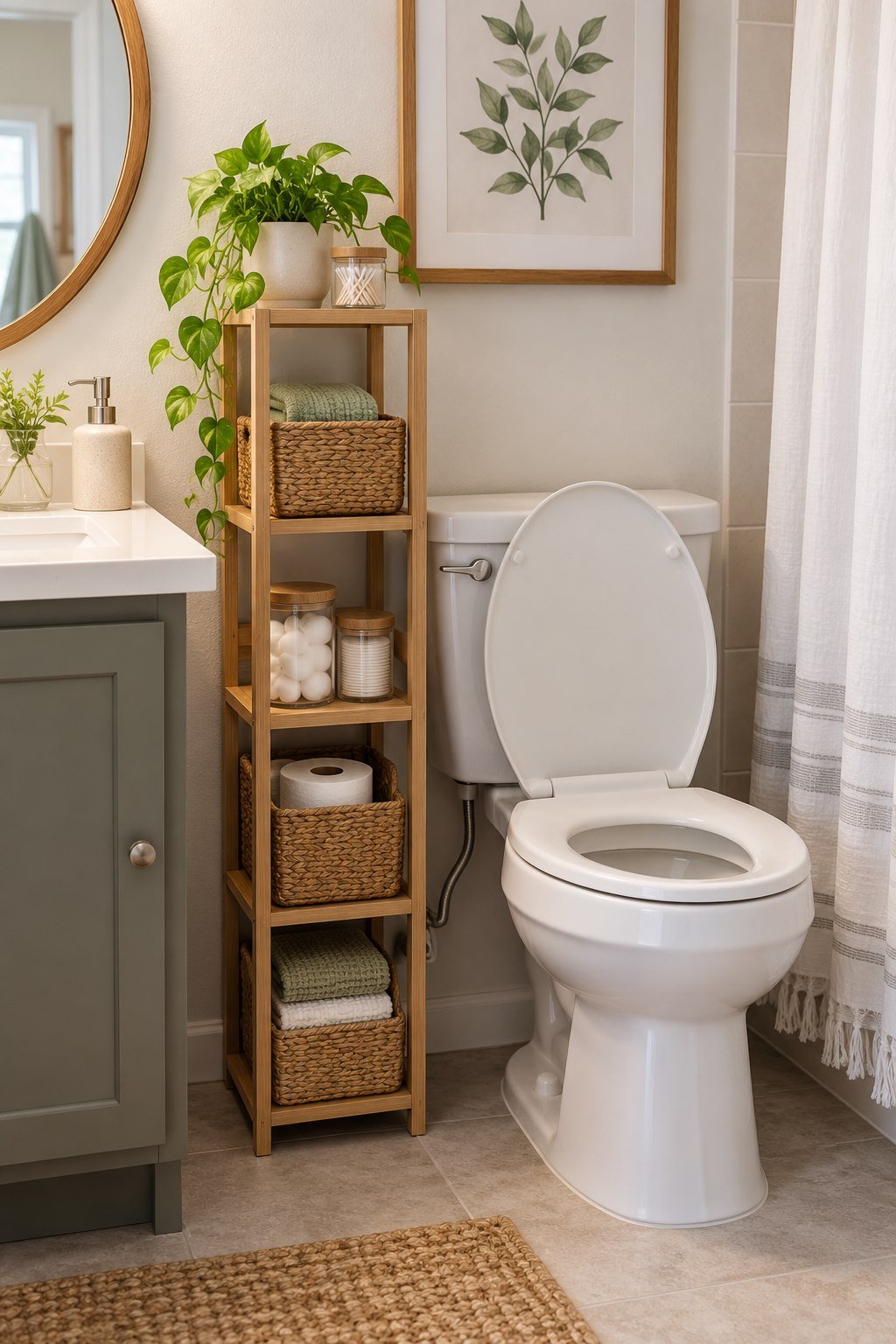
A small freestanding shelf beside the toilet can hold toilet paper and dry supplies if there is enough access. It should be easy to wipe underneath and should not crowd the seated position or obstruct the lid and tank.
Make it work at home: Measure the full lid movement and make sure the cistern remains serviceable. Choose a stable unit and follow anchoring requirements. Keep heavy objects low, and avoid placing fragile decor where it could fall onto the toilet or someone using it.
7. Park a slim cart in a real recess
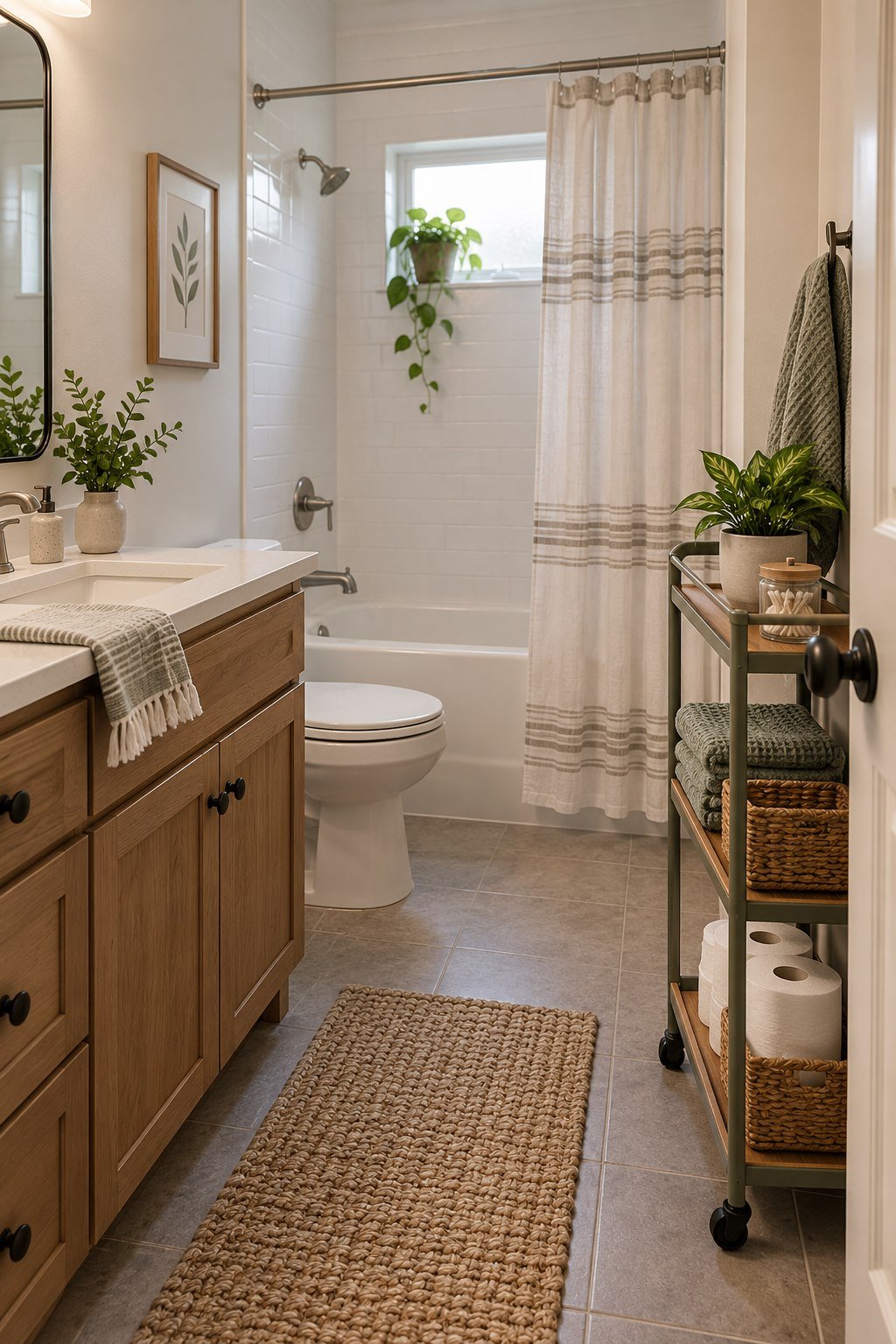
A narrow cart is useful for someone who needs movable storage, especially when supplies can be wheeled out for cleaning. It should fit its parking place without extending into the path. Moisture-resistant materials are easier to maintain.
Make it work at home: Check wheel stability and use locks if provided. Keep the cart outside the tub and shower zone and clear of the door swing. Put taller or heavier bottles on a lower tier so the cart is less top-heavy.
8. Make the back of the door earn its space
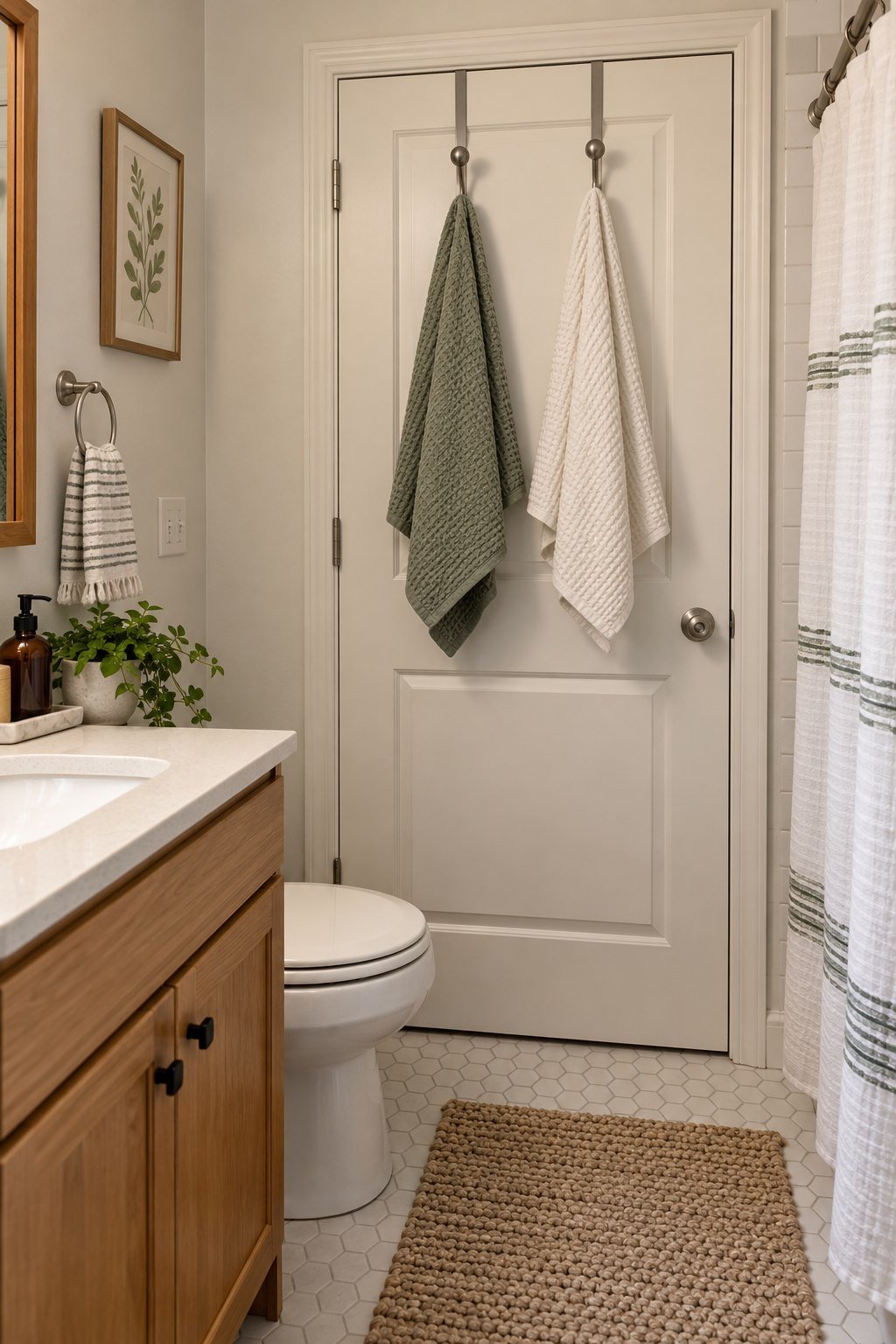
Over-door hooks can provide towel space without using a wall. Before buying, measure the door thickness and check the gap at the top. A hook that prevents the door from closing properly is not a workable rental solution.
Make it work at home: Close the door gently during your test and check the frame for rubbing. Choose a smooth hook that will not snag fabrics, and do not overload it. Keep towels from covering the handle, hanging onto the floor or bunching together.
9. Give each towel a separate drying position
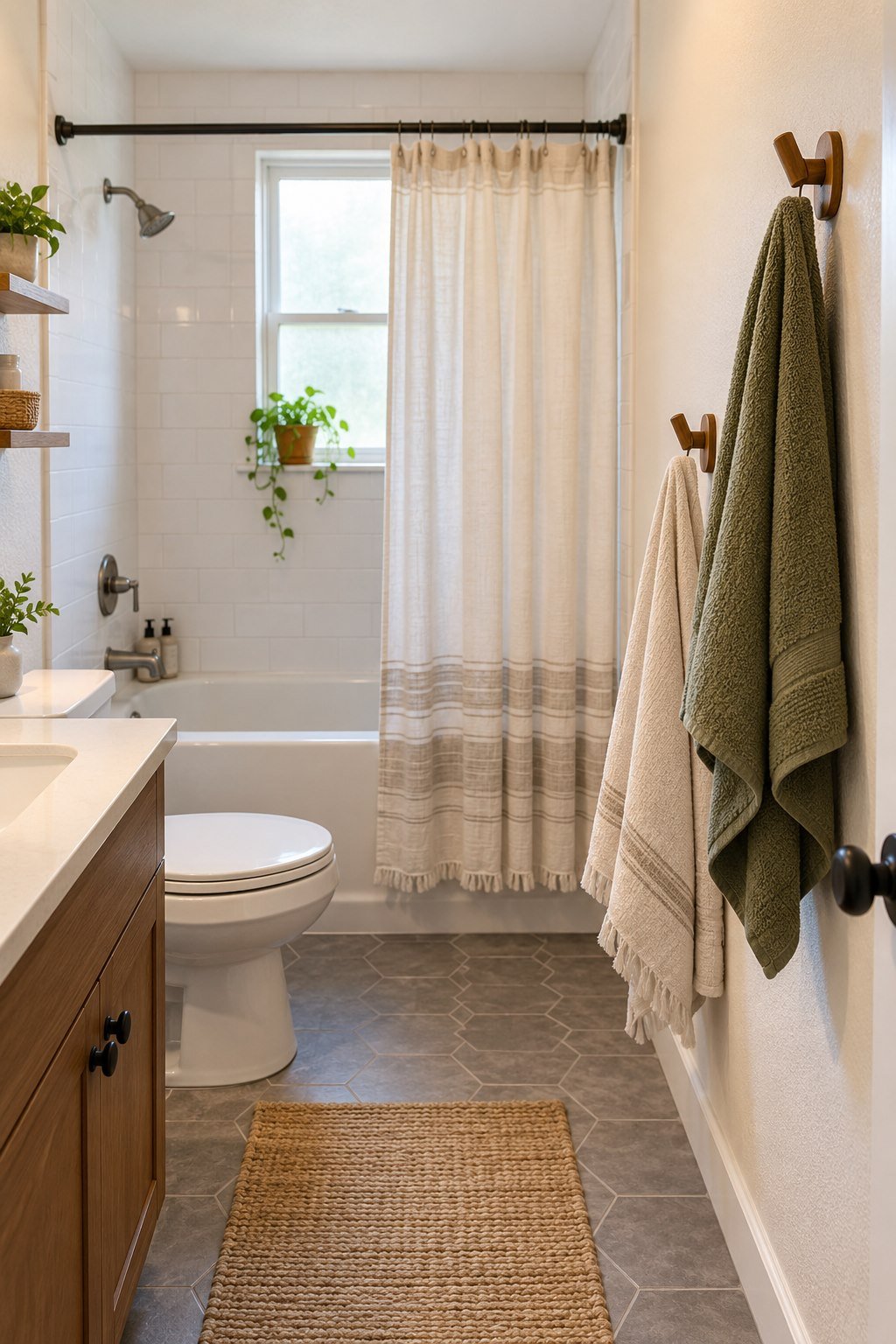
Two spaced hooks may be more useful than one overloaded rail. Place them where towels can hang without dragging or touching the toilet. Use a location that allows normal movement through the room.
Make it work at home: Wet towels are heavier than dry ones. Follow the rated wet load and approved surface instructions for the chosen hardware. Use bathroom-specific adhesive products only where their instructions permit, and allow the required bonding time before hanging anything.
10. Limit shower bottles to what you use
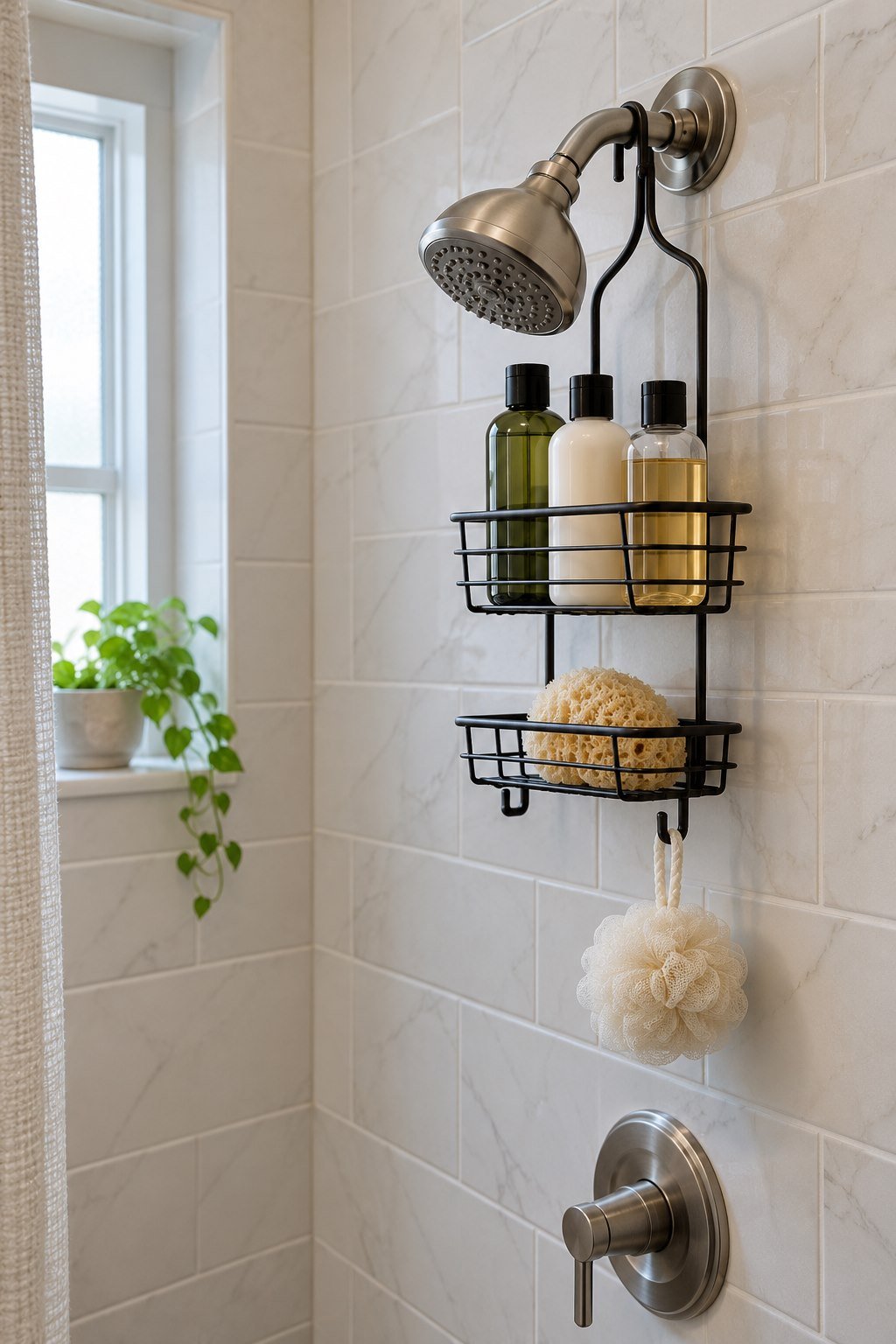
A properly fitted hanging caddy can keep the tub edge clearer. Choose a rust-resistant model designed for your shower setup, and put only the bottles you regularly use in it. Keep replacements in a dry storage area.
Make it work at home: Check how the caddy is secured and whether it interferes with the showerhead or controls. Do not exceed its load limit or assume any shower arm can support a heavy basket. Remove and clean the caddy as the manufacturer directs.
11. Consider a tension shelf only on suitable surfaces
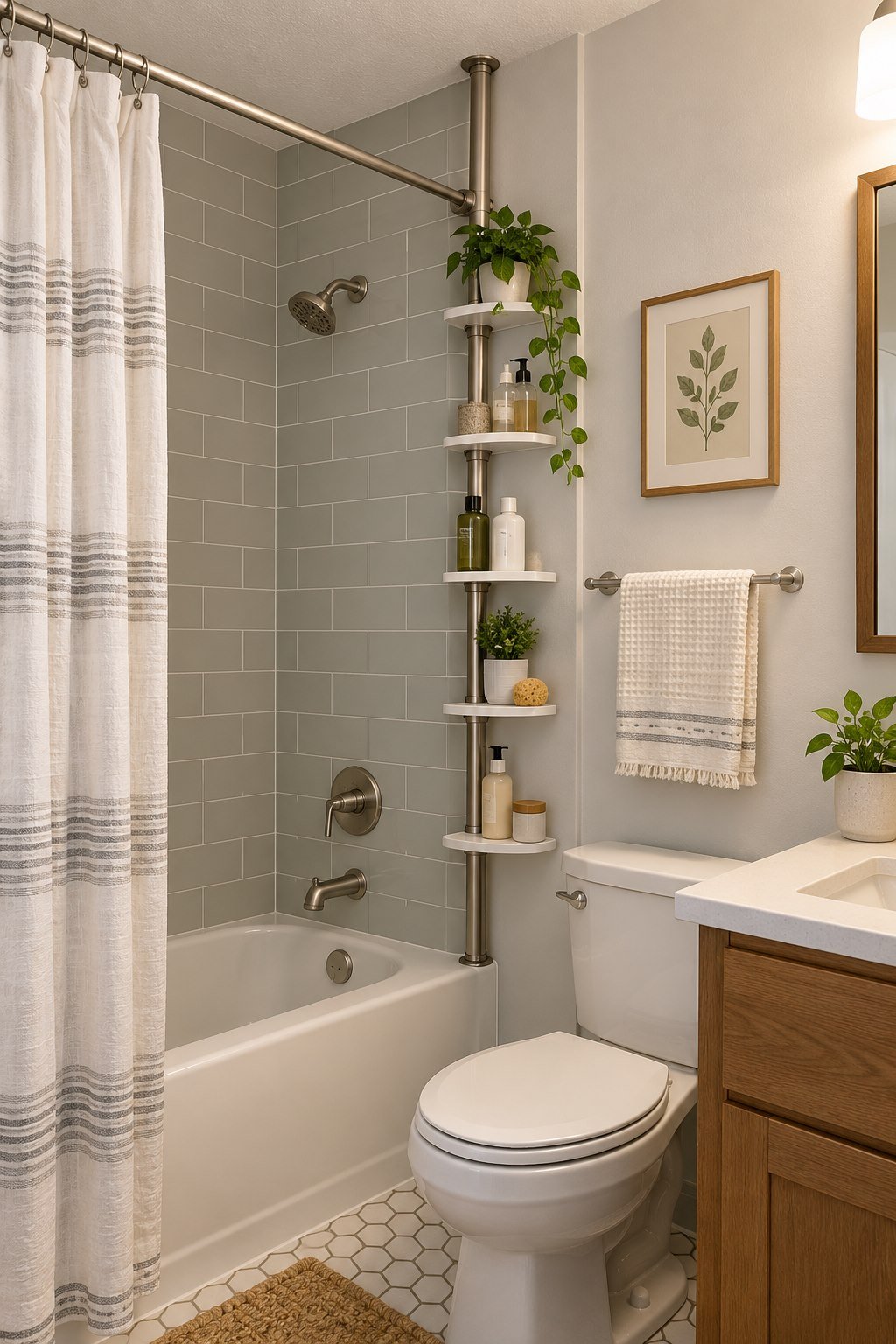
A tension pole shelf can help in some tub layouts, but it needs firm compatible contact surfaces and the correct adjustment range. Measure the span carefully. Choose a unit intended for wet-area use rather than adapting a dry-room shelf.
Make it work at home: Follow assembly, loading and maintenance instructions. Do not wedge it against a fragile ceiling or unsupported surface. If it slips, rocks or cannot be fitted securely, remove it and choose a different solution; more tension is not always the answer.
12. Use an open basket for clean washcloths
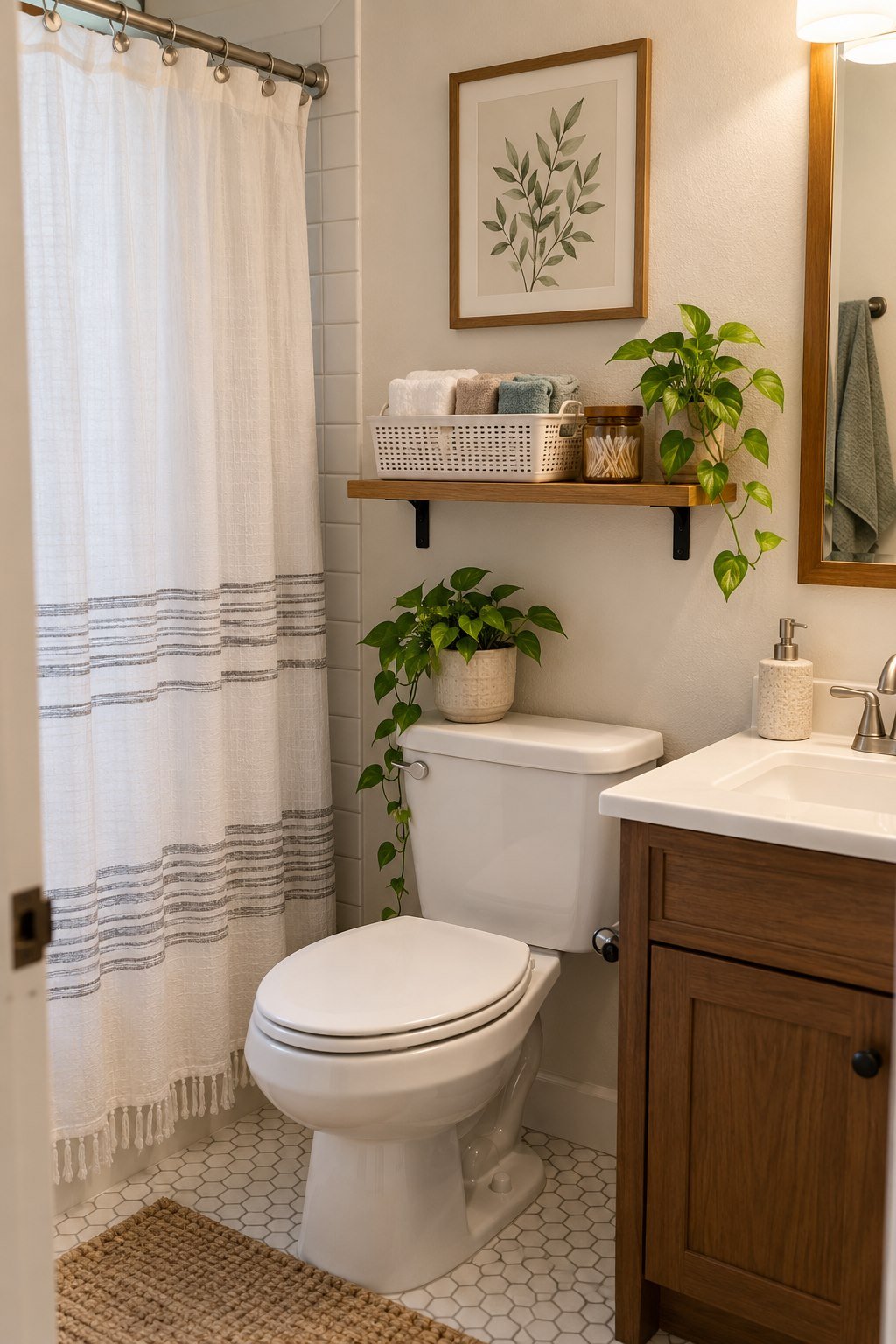
A small washable basket on a dry shelf makes washcloths easy to grab. Keeping only a few in the bathroom reduces bulk and makes it easy to rotate the clean supply. Open storage also helps you see when you need to restock.
Make it work at home: Put only fully dry cloths in the basket. Use a separate place for used laundry. If the shelf gets damp, move the clean linen supply outside the bathroom and keep just the amount you will use that day.
13. Stack only what you can reach easily
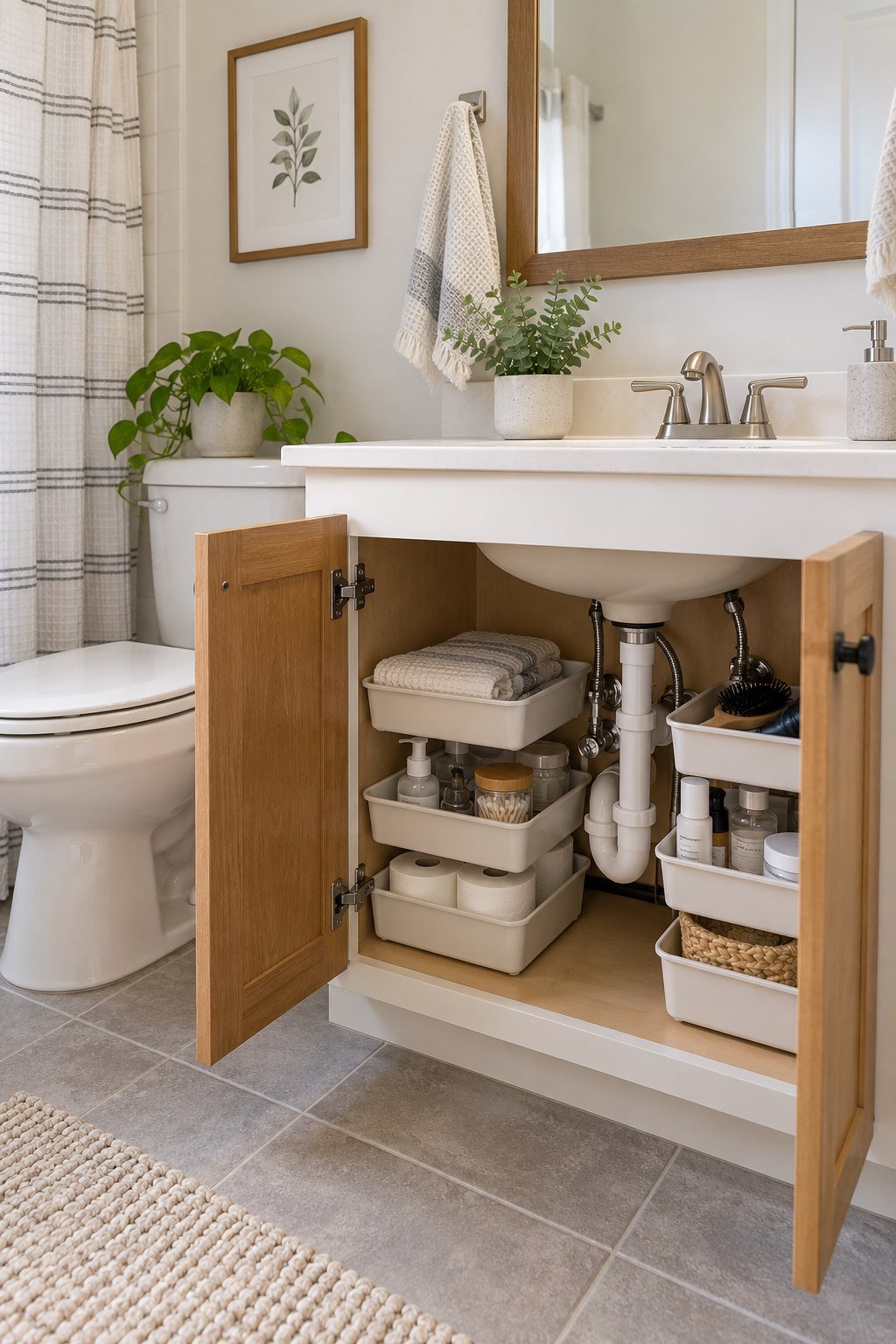
Shallow stackable bins can work for light spare supplies inside a vanity. Choose a stack that stays stable and does not hide frequently used products underneath several layers. A drawer-style bin may be easier than lifting boxes every morning.
Make it work at home: Measure the combined height and leave clearance to remove each bin. Keep pipe access clear and put heavier items low. If restocking requires taking apart the whole cabinet, reduce the stack or move spares to another room.
14. Label by routine instead of product brand
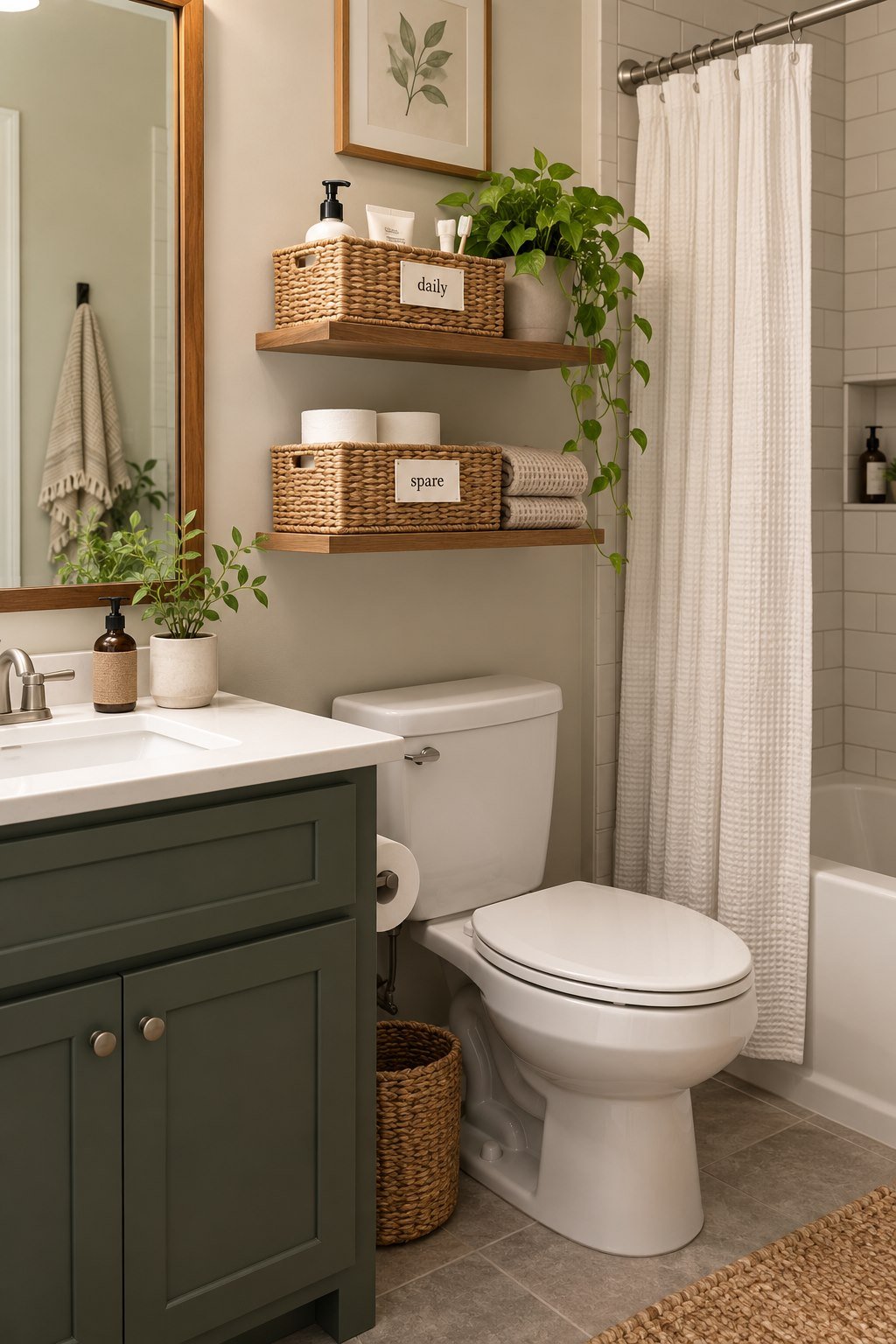
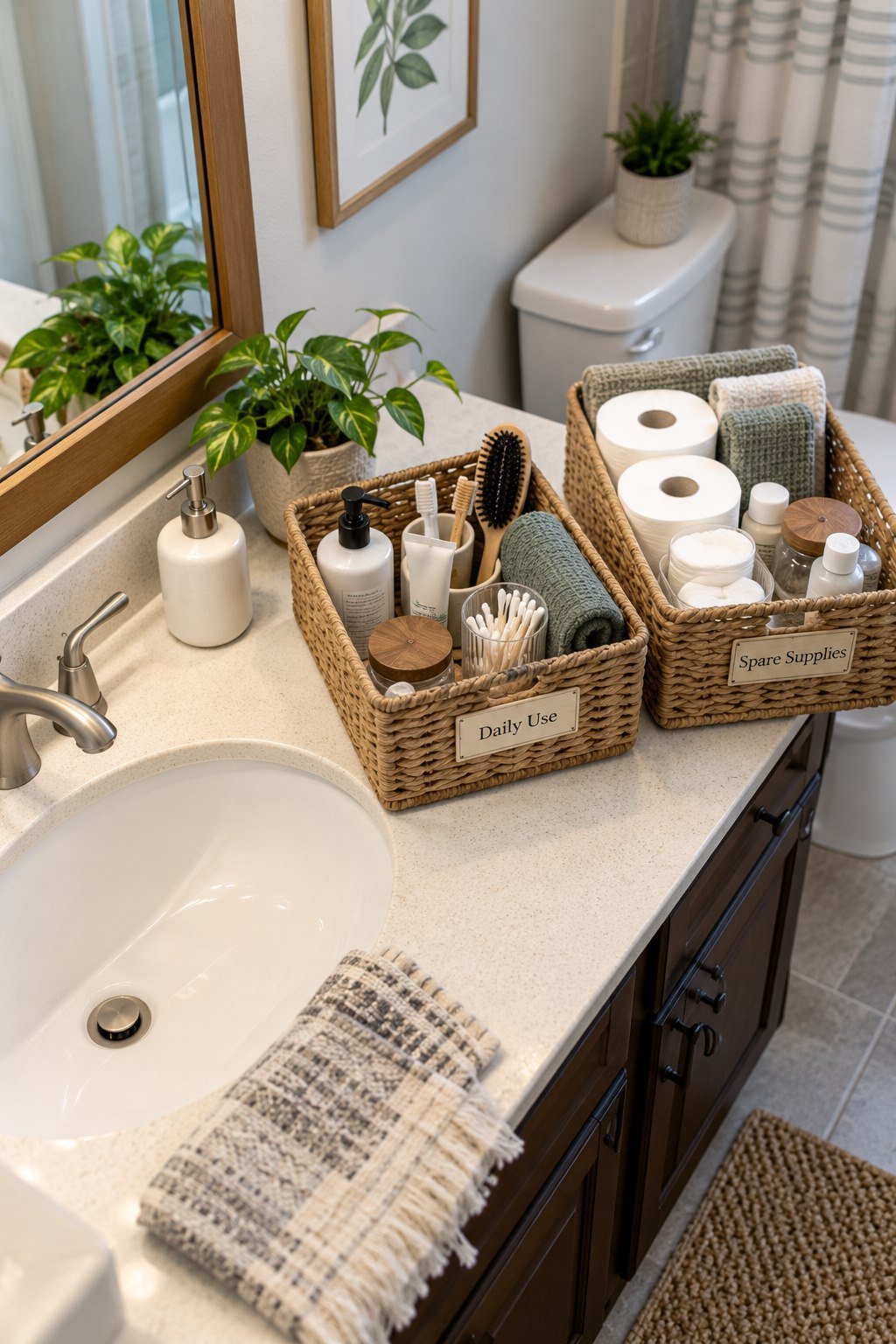
Simple categories such as daily, spare and hair can make a shared bathroom easier to reset. The labels are most helpful on closed or identical containers, where you cannot immediately see the contents. Broad categories are easier to maintain.
Make it work at home: Use wipeable labels on dry storage and do not cover original safety or ingredient labels. Leave a little spare capacity in each basket. When one category overflows, review its contents before buying another container.
15. Use a small hamper only where it stays dry
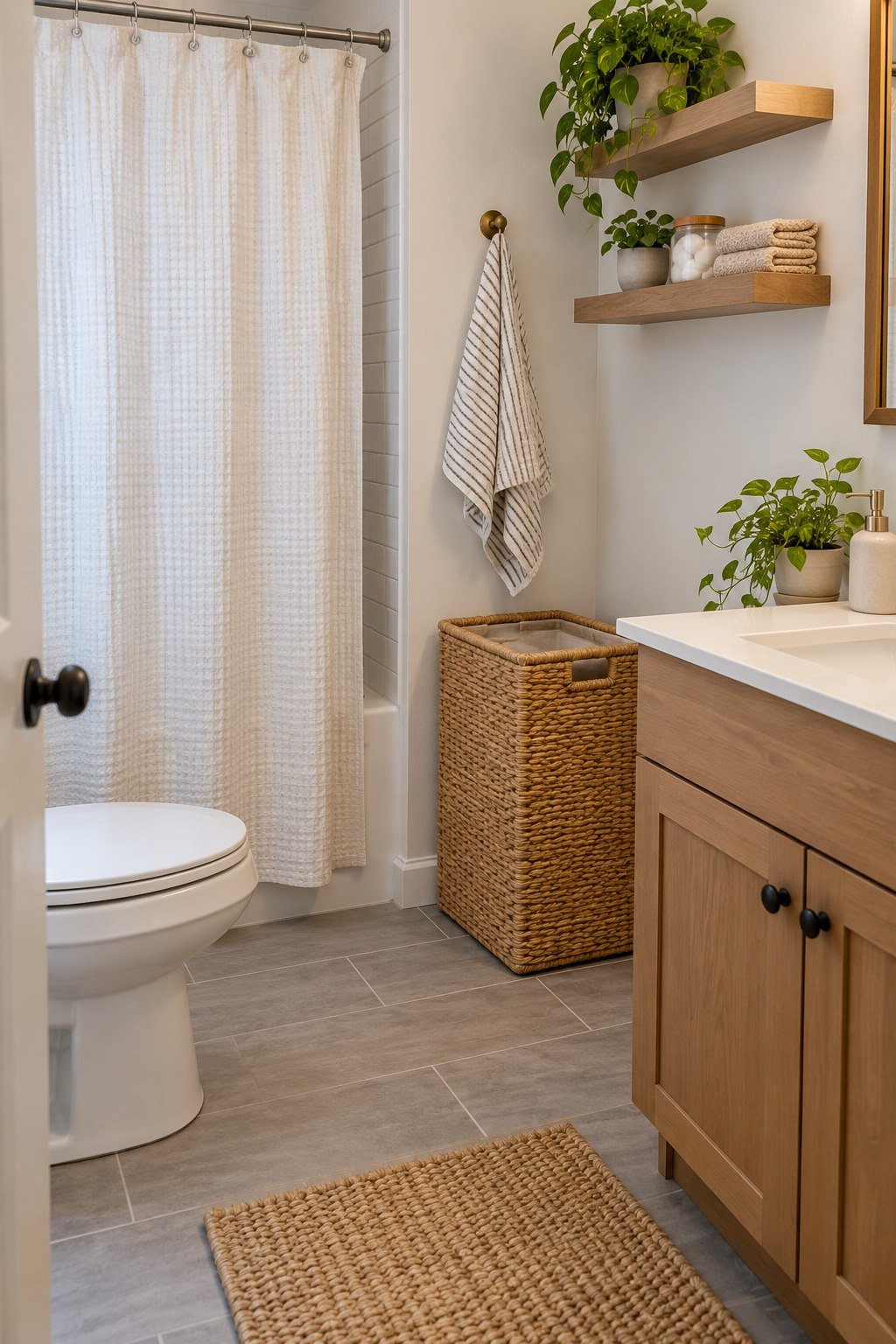
A compact hamper can prevent towels from piling on the floor, but it needs a dry location and a size that fits your laundry routine. An open or ventilated design makes it easier to notice when the laundry needs attention.
Make it work at home: Do not pack soaking towels into a closed container and leave them there. Let wet textiles dry appropriately and wash them regularly. If the bathroom has no suitable dry corner, keep the hamper just outside the room.
16. Give toothbrush supplies a clean landing spot
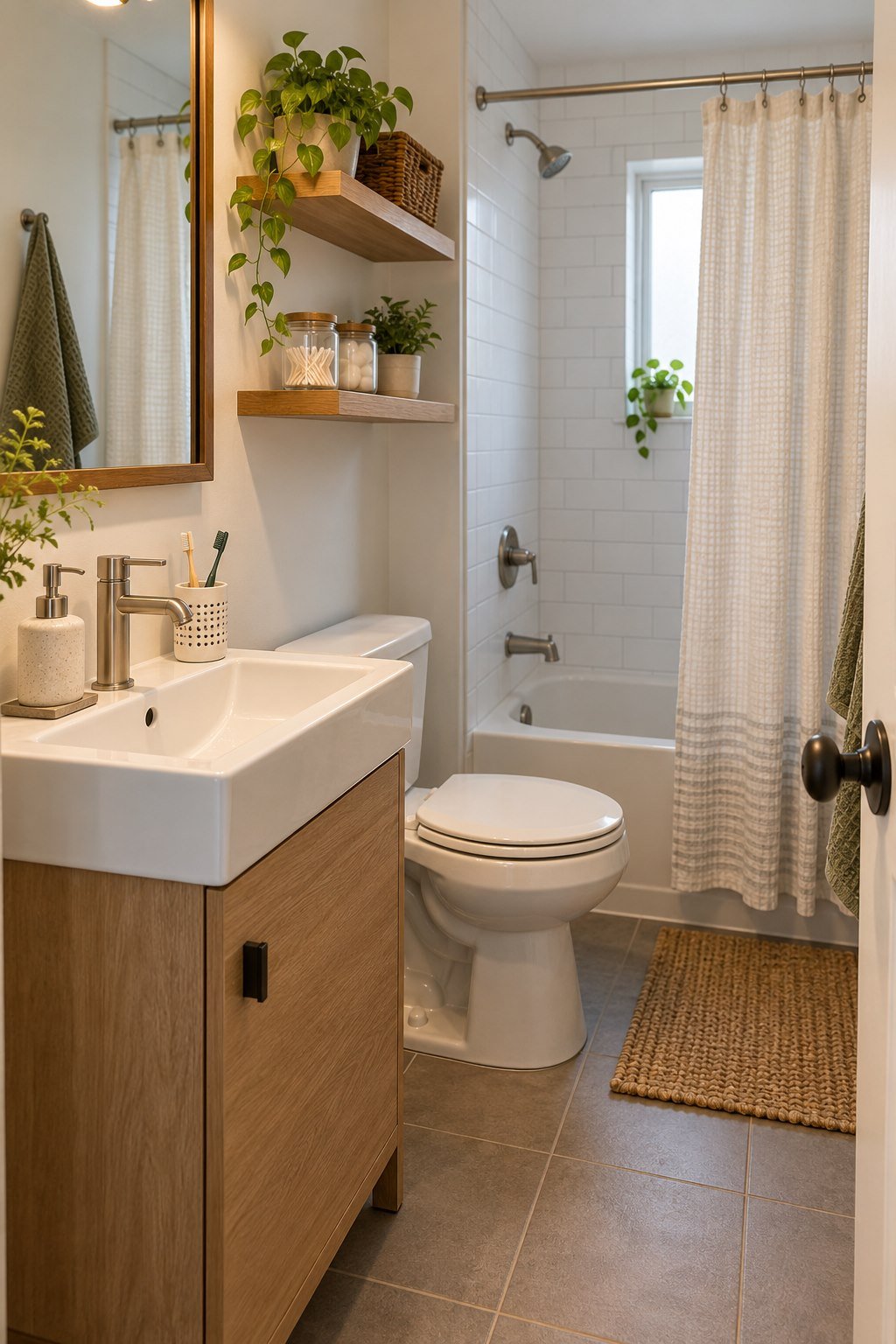
A simple ventilated holder can keep toothbrushes upright while preserving sink space. Choose a holder that can be taken apart or washed easily. Place it away from direct soap splashes and keep the surrounding surface easy to wipe.
Make it work at home: Do not overcrowd the holder or let brushes press together. Follow toothbrush and holder care guidance. If the counter is too narrow, a dry shelf may be more practical than adding a large decorative organizer beside the basin.
17. Keep cleaning supplies separate from toiletries
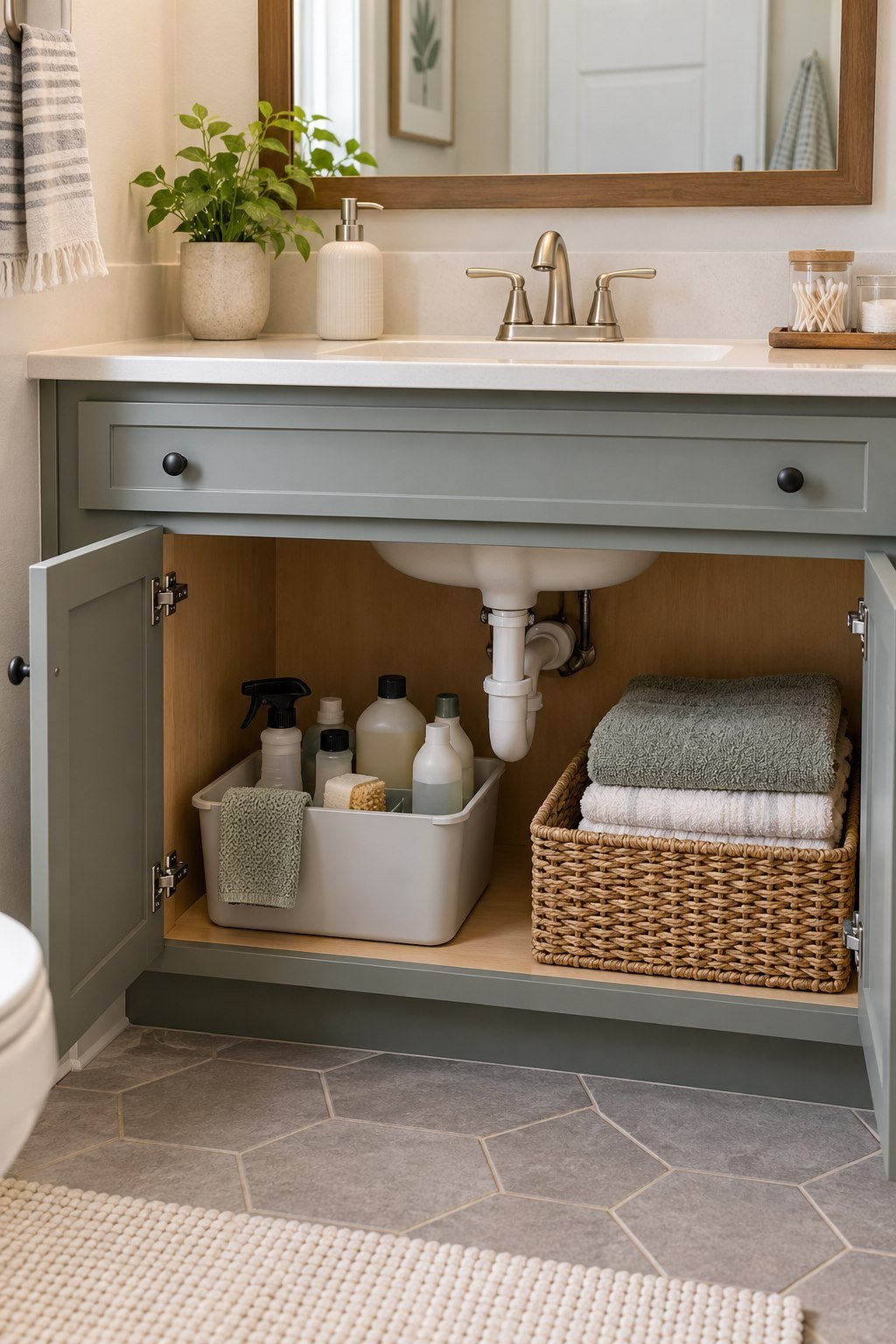
A compact cleaning caddy helps you carry supplies in and out while keeping them apart from clean towels and daily grooming items. Store products in their original closed containers and follow every label’s storage directions.
Make it work at home: Where children or pets can access the bathroom, use suitably secured storage or another appropriate location. Do not transfer cleaners to attractive unlabeled bottles, and never mix products. Only keep the supplies the bathroom needs.
18. Store hair tools only after they cool
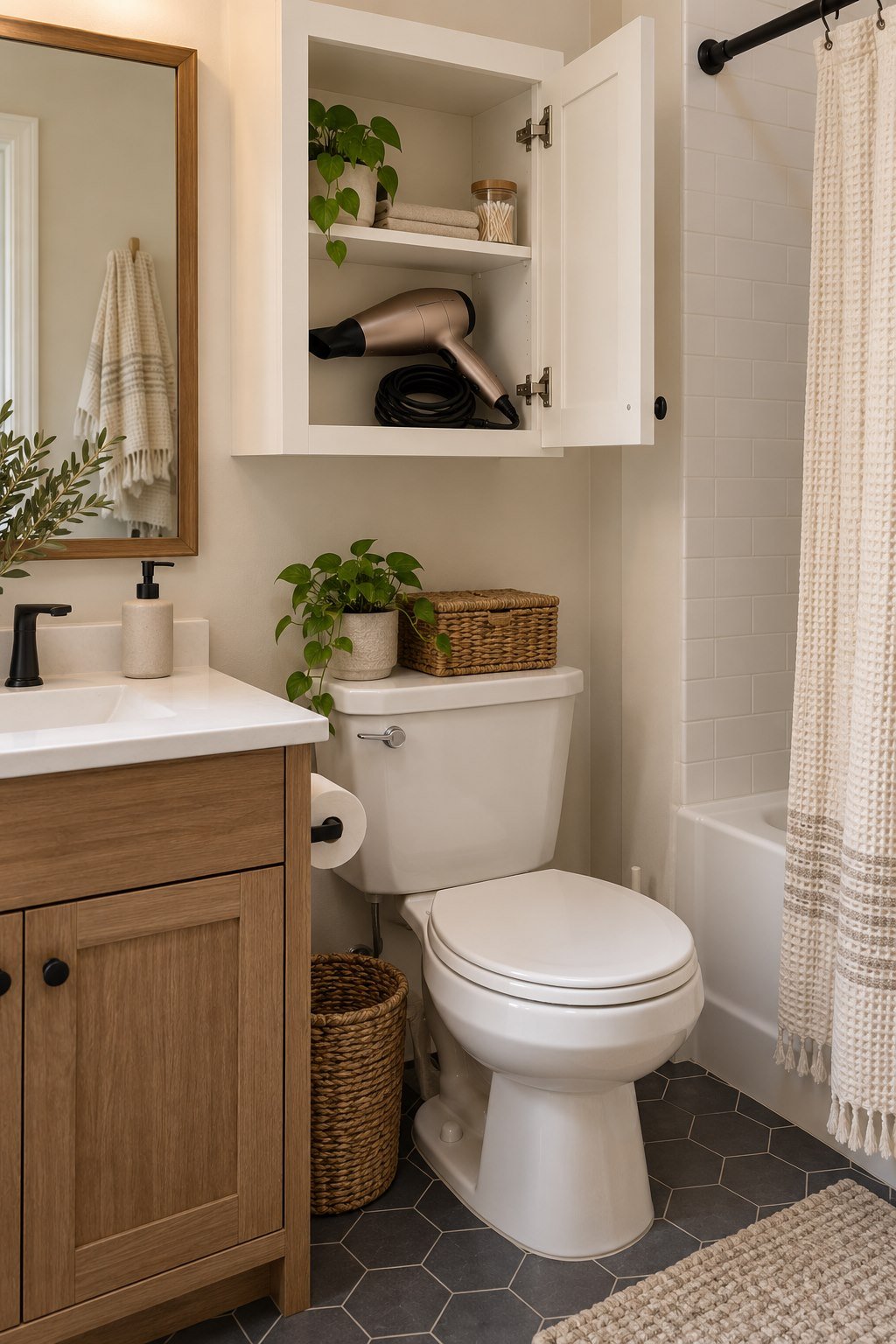
A dry cabinet shelf or suitable holder can keep hair tools from sprawling across the sink. Allow a tool to cool completely before storing it, and choose a holder designed for the intended use. Arrange cords so they do not catch in the door.
Make it work at home: Unplug tools after use and keep them away from the sink, bath and shower. Storage inside a cabinet is for a cooled, unplugged tool; do not operate it there. Follow the appliance instructions and never add a power strip to a wet-area storage setup.
19. Create one small basket for each person
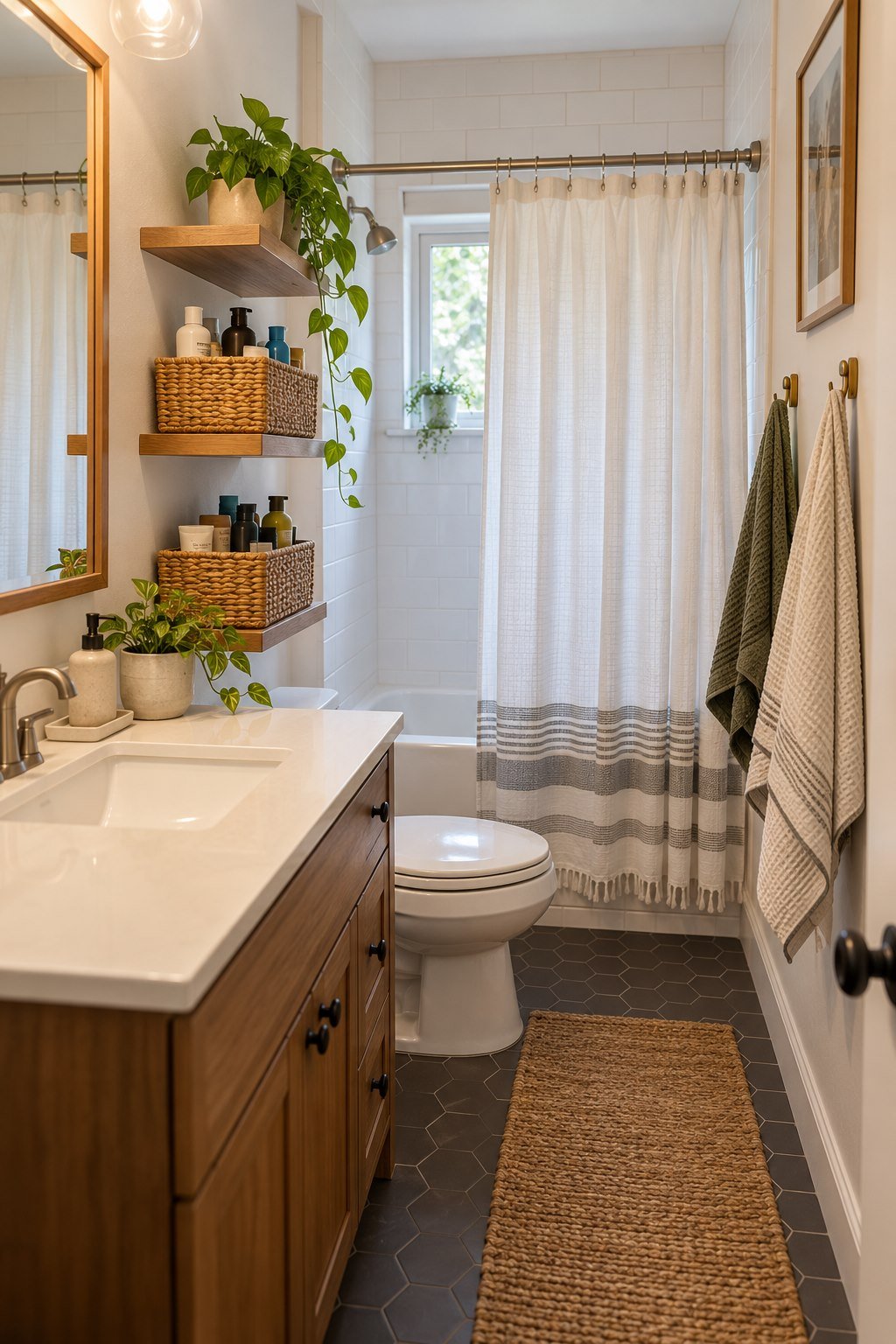
Separate daily baskets make a two-person bathroom easier to reset without turning the counter into a row of bottles. Each person gets a manageable container; shared soap and other genuinely shared products stay in one agreed place.
Make it work at home: Give each person a separate towel position as well. Once a week, wipe the baskets, return wandering items and refill only the missing essentials. Keep the system simple enough to follow on a rushed morning, not only after a full clean.
A simple weekend plan
First, remove unused products and measure the storage you already have. Next, give daily toiletries, spare supplies and towels separate homes. Add just one organizer for the biggest remaining problem, then try the routine for a week. If an item is hard to return to its place, simplify the arrangement.
Frequently asked questions
What is the first step when a small bathroom has no storage?
Sort the products you actually use every day and measure the available dry storage. Keep spares outside the bathroom if possible, then select a small organizer for the daily items. This prevents buying storage that is too large or unnecessary.
Can I use removable adhesive hooks in a rental bathroom?
Only when your lease allows it and the exact product is approved for the surface and location. Bathroom-rated and shower-compatible are not interchangeable claims. Follow preparation, load, waiting and removal instructions. See the manufacturer’s bathroom installation guidance before choosing a mounting position.
What if the bathroom is windowless or stays damp?
Keep the arrangement easy to clean and avoid storing extra textiles in persistently damp areas. A working exhaust fan and prompt repair of leaks matter more than accessories. The EPA’s moisture and mold guide explains why controlling moisture is essential. Ask your landlord to address failed ventilation or recurring water problems.
Make the rest of your apartment work just as well
For another bathroom approach, read 19 Small Apartment Bathroom Decor Ideas That Feel Calm and Stylish. For whole-room planning, explore studio apartment layout ideas and our Small Space Living collection.