Refresh the bedroom you already have with lighting, washable bedding and less clutter. A $200 example excludes the bed, mattress and major furniture.
In this guide
Example $200 allocation
- Lamp bases and compatible bulbs: $50.
- Duvet cover and pillow covers: $55.
- Throw: $20.
- Washable runner: $30.
- One permitted wall or curtain refresh: $30.
- Reserve: $15.
Reuse sheets, pillows, bed and furniture. If your actual basket exceeds the cap, skip the wall refresh first. Tax and delivery are outside this illustration.
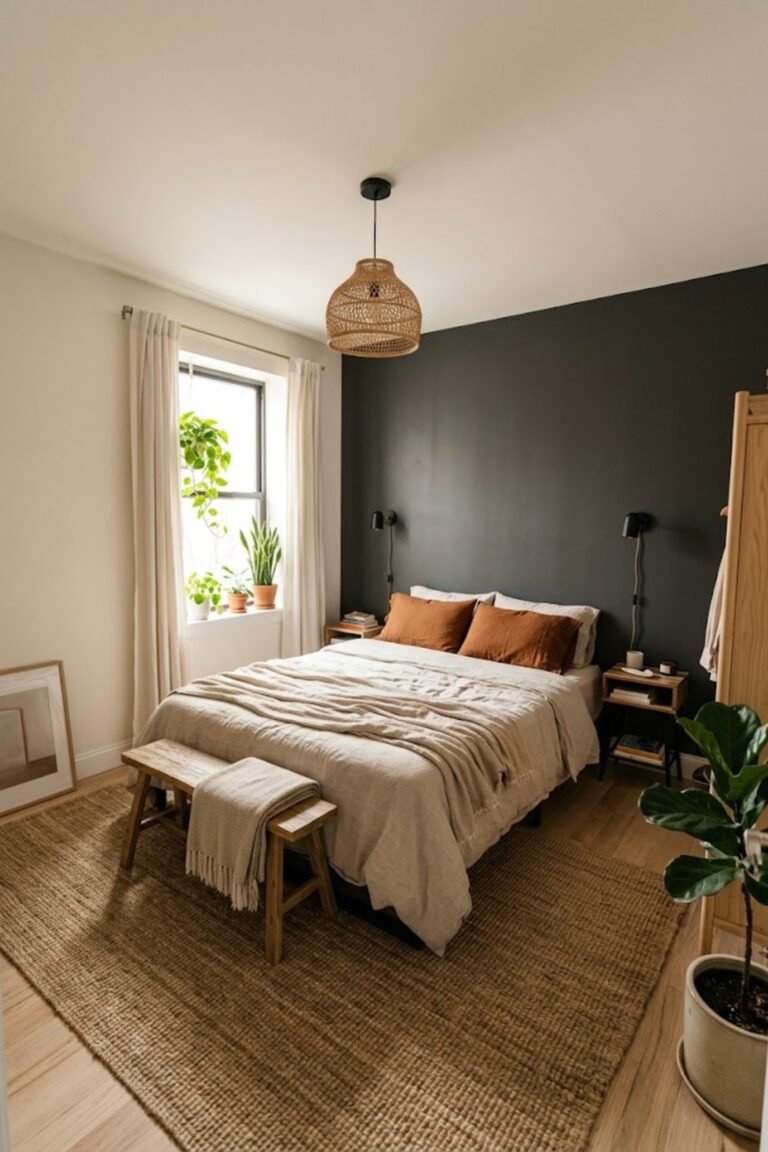
Bedrooms are the easiest room to transform on a budget, because coziness is not a furniture problem — it is a light, texture, and color problem. All three are cheap to fix. Use this staged refresh if your bed, mattress and main furniture are already usable.
First, the mindset: cozy is measurable
When a bedroom feels cozy, you are reacting to four things:
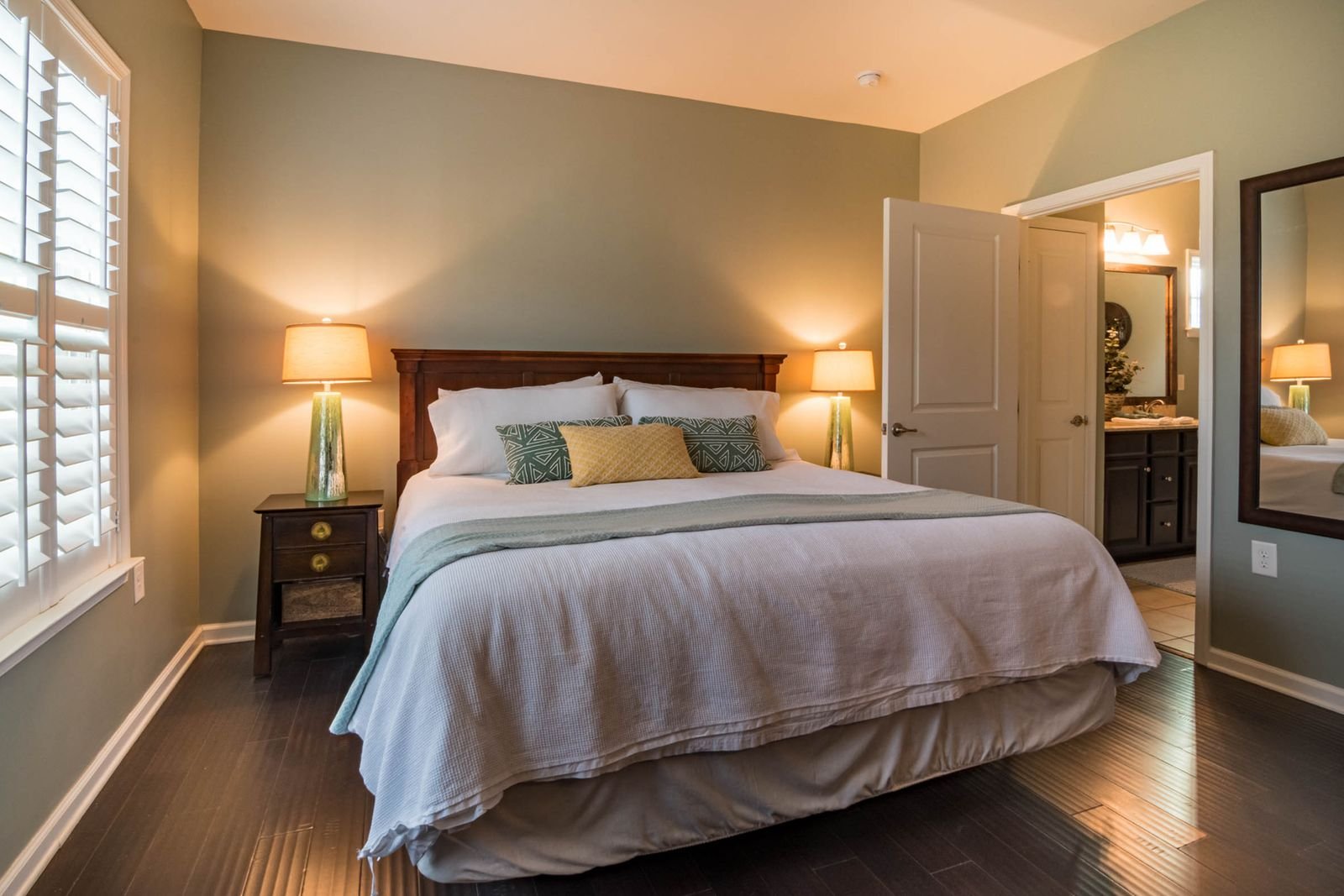
- Warm, dim light — never one bright ceiling bulb
- Layered bedding with visible texture
- Something soft underfoot
- No visual clutter
Every step below targets one of those four.
Step 1: Warm, low lighting
- Skip the ceiling light after dark, permanently.
- Two small budget-friendly table lamps (thrifted bases work great) with 2200–2700K bulbs.
- One on the nightstand, one on the dresser opposite — light from two directions at pillow height.
Step 2: The bedding formula
- Base: your existing sheets, smoothed out.
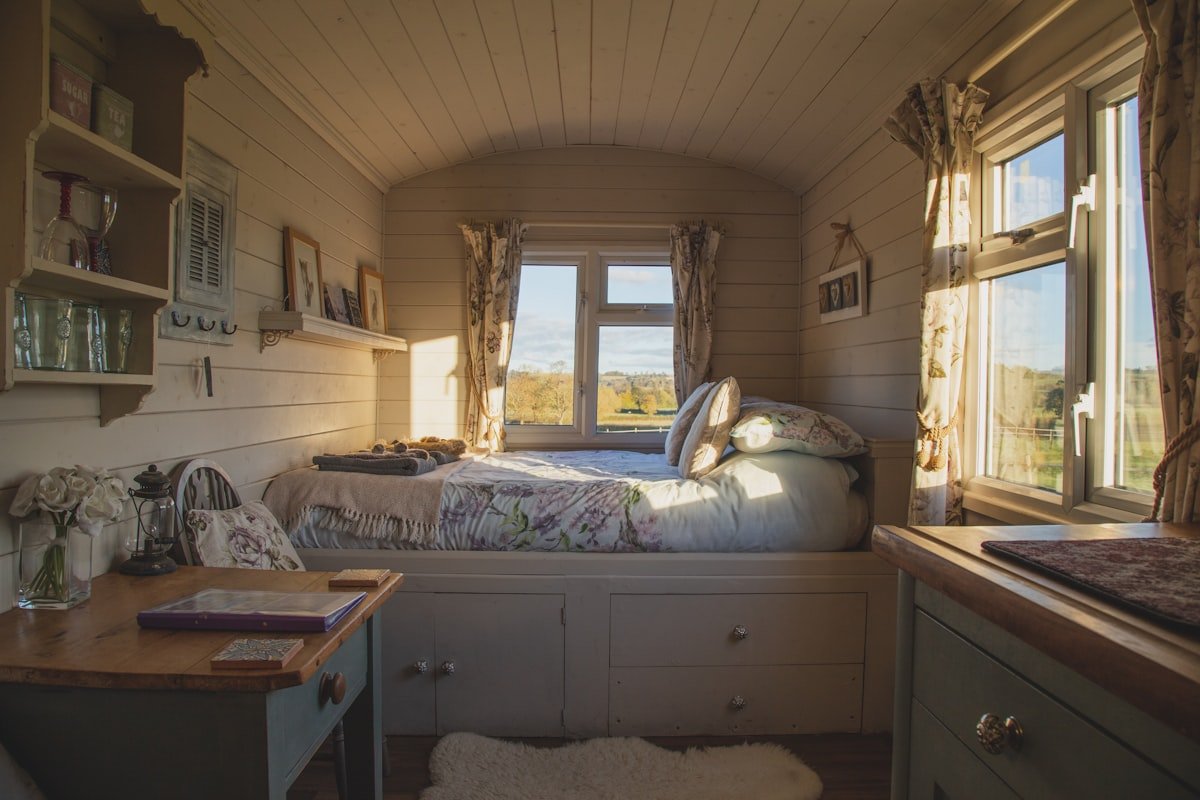
- Duvet with a textured cover — waffle, gauze, or washed cotton hides wrinkles and reads expensive.
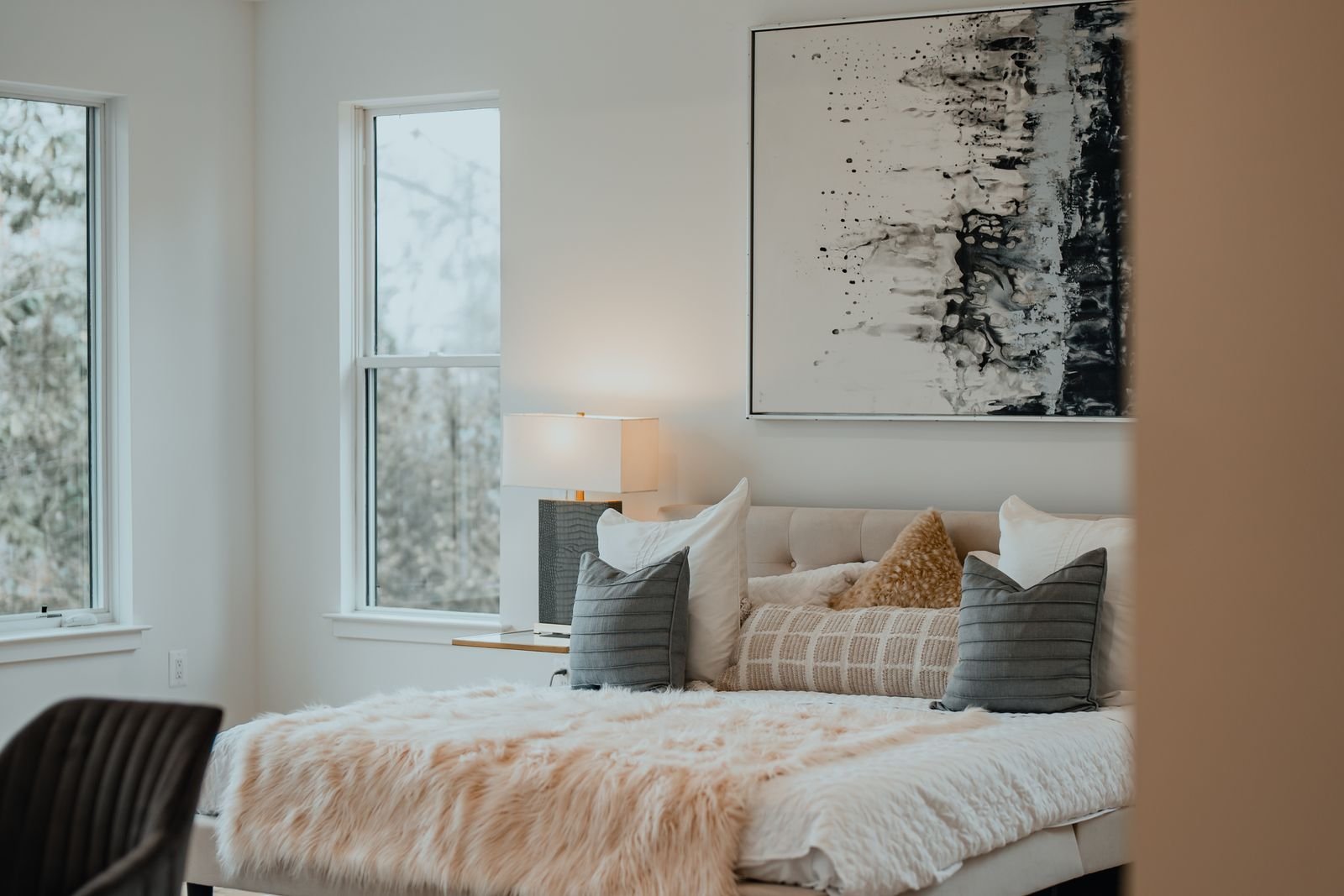
- One throw blanket in a heavier knit, folded in thirds across the foot of the bed.
- Two textured pillow covers over your existing pillows — never buy new inserts just for looks.
🛏️ The golden rule
Stick to two colors plus white. A rumpled, layered, two-tone bed beats a perfect five-color one every time.
Step 3: Something soft underfoot
- A small washable runner with floor-compatible non-slip backing and flat edges beside the bed.
- Your first sensation of the day is soft — nobody regrets this upgrade.
Step 4: Calm the nightstand
- Everything off except three things: a lamp, one book, one small object.
- Route charging cables behind the nightstand with a binder clip.
- Costs nothing — changes the entire feel of the last corner you see every night.
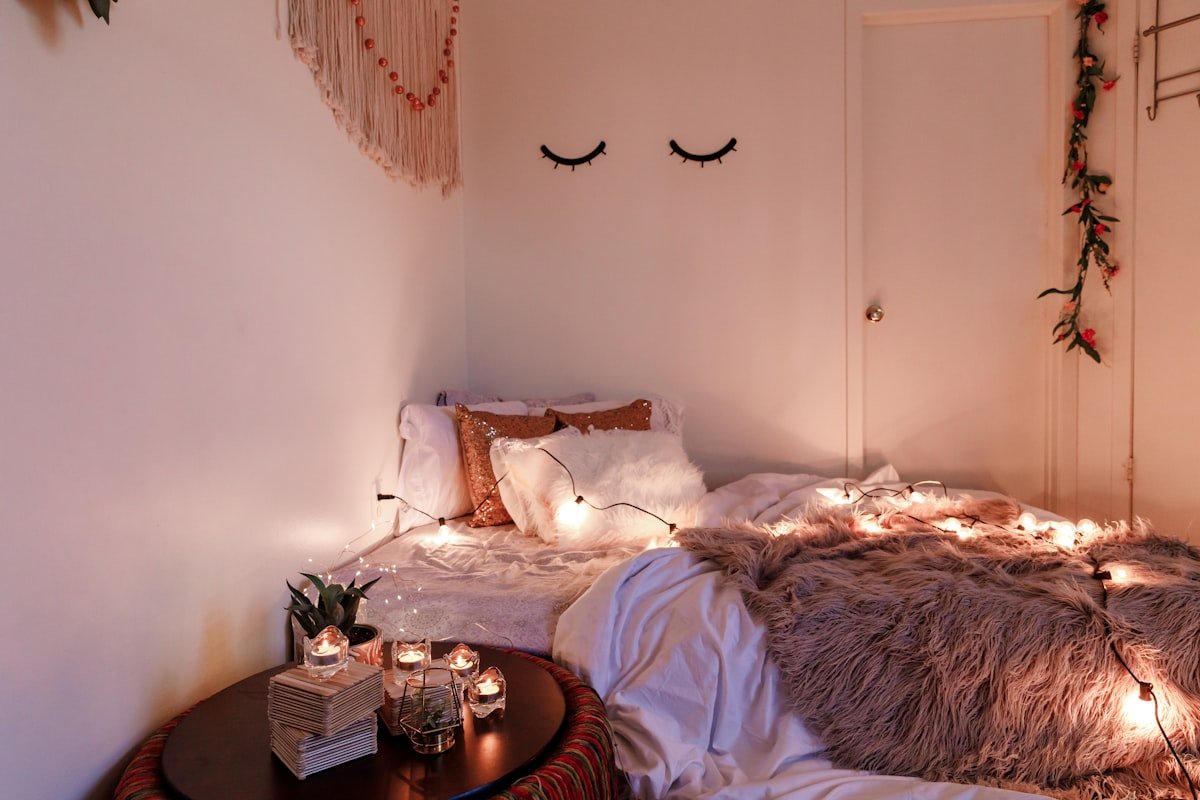
Step 5: Soften the walls
Pick one of these, not all three:
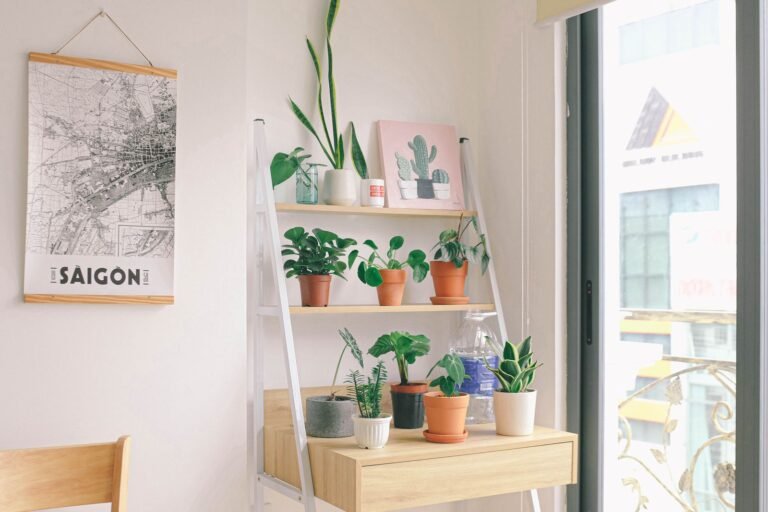
- Lightweight art on a wall away from the bed, with suitable permitted fixings. Avoid adhesive-hung items over sleepers.
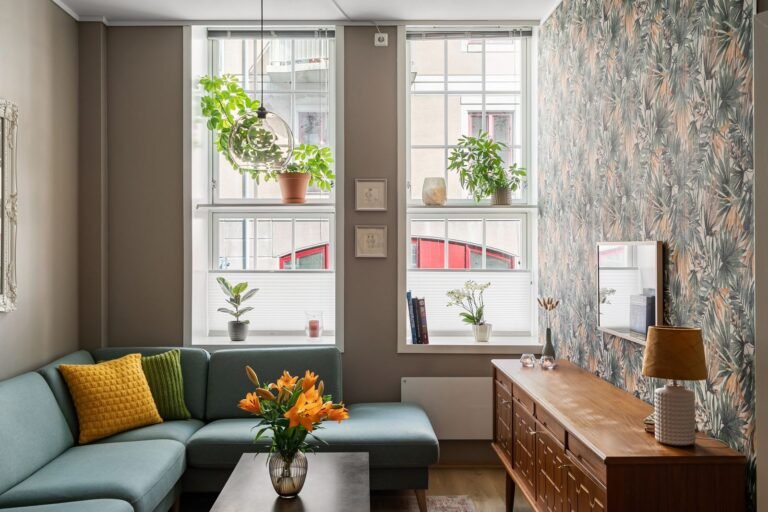
- Soft curtains — hung high and wide, as always.
- A slim gallery wall of 5–6 personal photos in matching frames — our lightweight gallery wall guide explains layout and suitable fixing checks.
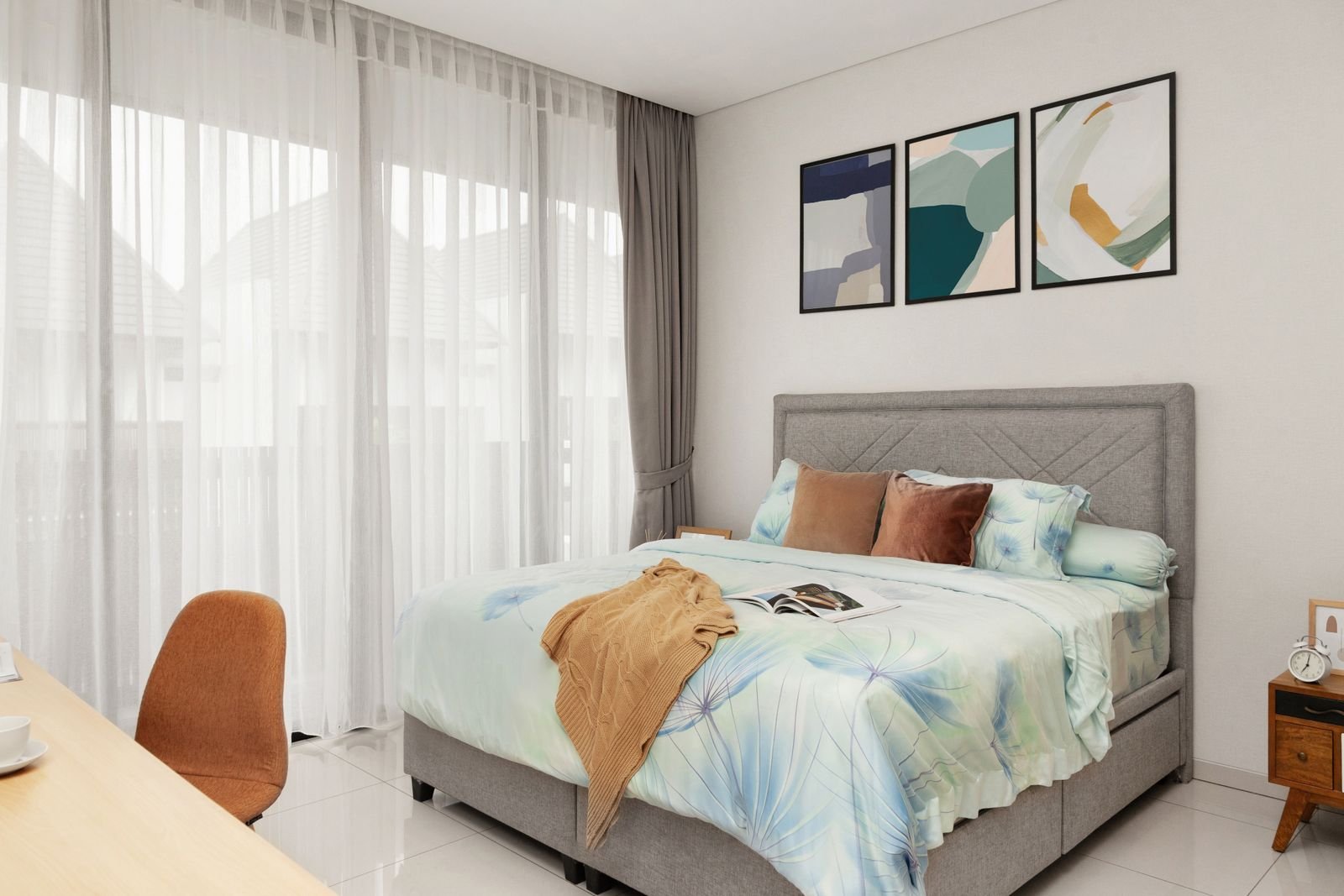
What NOT to spend on (yet)
- New furniture, matching bedroom “sets”, and headboards can wait.
- A dated dresser disappears once the lighting is warm and the bed is layered.
- Still bothered? Contact paper may alter the finish; check permission and surface compatibility, test discreetly and follow removal directions.
- For bigger tricks in a small bedroom, our zoning guide covers separating the sleep area from everything else.
How it all fits under $200
You do not need specialty stores for any of this. Every item in the plan — the lamps, warm bulbs, bedding layers, the runner, and one wall upgrade — is a regular budget find at Walmart, Amazon, IKEA, Target, and your local thrift store.
An example shopping cap totals $200 — actual shop prices, tax and delivery vary. This is a planning example, not a current price guarantee.
How to stay under $200: thrift the lamp bases, pick just one wall upgrade, and skip anything with a brand name on the tag. The nightstand step is free.
💰 The bottom line
The whole makeover — lamps, bedding layers, rug, and wall art — comes in around $200. Portable pieces move easily; curtains, fixings and adhesive treatments still need lease and product checks.
A small weekend refresh can start with portable pieces. Start with the lamps tonight — it is the cheapest step and you will feel the difference immediately.